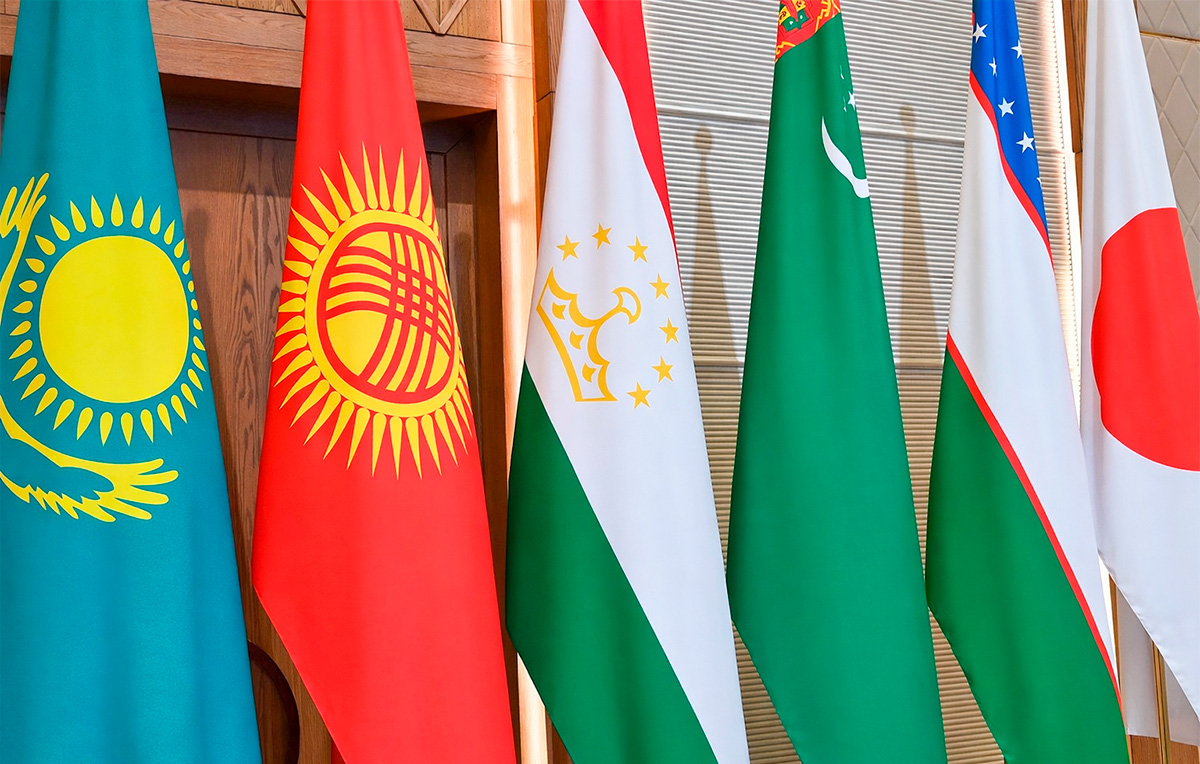
 Japan–Central Asia summit. Photo: primeminister.kz.
The current Japan–Central Asia summit has been anticipated for nearly a year and a half. It was originally scheduled to take place in Kazakhstan in August 2024. However, just days before the planned meeting, on August 8, a series of earthquakes with a magnitude of 7.1 struck near the island of Kyushu. Japanese seismologists warned at the time that even more destructive tremors could follow. Citing the seismic threat, then–Prime Minister Fumio Kishida decided not to leave the country and postponed the summit indefinitely.
Racing Against the Earthquake
A new date for the summit was not set immediately. For some time, officials referred only to an approximate timeframe — mid-December 2025. Eventually, it was officially announced that the summit would be held in Tokyo on December 19–20.
By an ironic twist of fate, less than two weeks before the rescheduled meeting, Japanese seismologists issued another warning. This time, they said that residents of Tokyo and the surrounding areas should prepare for a possible earthquake. According to their estimates, the potential tremors could be powerful enough to claim up to 18,000 lives and cause damage amounting to $535 billion.
To the impressionable observer, it might have seemed as though the Japan–Central Asia summit had incurred the wrath of Japan’s spirits — the earthquake-controlling giant catfish Namazu, or even the sun goddess Amaterasu herself. Fortunately, it soon became clear that the scientists were referring to a much more distant scenario — a risk projected over the next three decades. This timeframe was deemed sufficient for Central Asian leaders to attend the summit and return home safely, and the meeting was therefore not canceled.
What Does Democracy Have to Do with It?
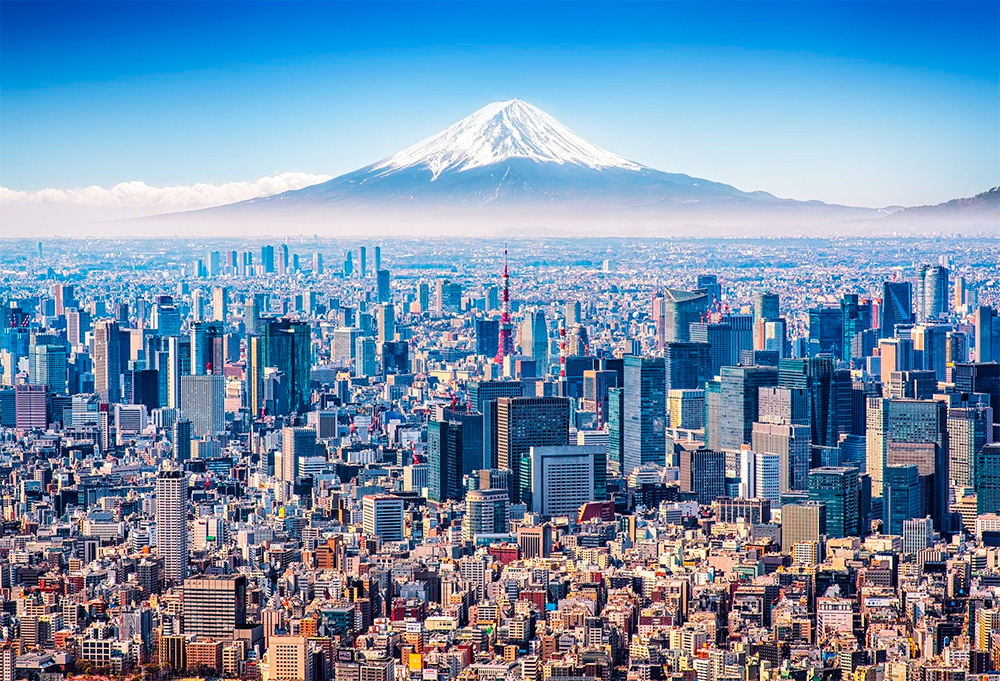 Central Asia + Japan summit to be held in Tokyo. Photo: ocdn.eu.
The history of the Japan–Central Asia summit, in fact, dates back to 2004. It was then, in Astana, that the launch of a dialogue between the governments of the region’s countries and the Land of the Rising Sun was announced. At the same time, the main objectives of the dialogue were articulated:
▪️ strengthening peace, stability, and democracy in Central Asia;
▪️ boosting the region’s economic capacity, advancing reforms, and promoting social development;
▪️ enhancing intra-regional cooperation;
▪️ developing relations between Central Asia, Japan, and the international community;
▪️ further expanding Japan’s cooperation with the Central Asian states.
It is worth noting that meetings within the Japan–Central Asia dialogue held after 2004 never rose above the level of foreign ministers. This time, however, the summit will bring together the leaders of all five Central Asian countries, as well as Japan’s prime minister, Sanae Takaichi. For this reason, the current summit is widely described as historic. To paraphrase Bulgakov’s Woland, one might say: “An interesting story will unfold in Tokyo today.”
What, then, could this summit offer that has not already been seen at similar forums with other partners of the Central Asian republics?
Put simply, the formula of such summits in the Central Asian context has long been familiar and can be summarized as follows: resources in exchange for money and technology. The Central Asian republics, with their abundant natural resources, act as suppliers, while Japan provides capital and technological expertise. Roughly the same model underpins relations between Central Asia and the United States, China, the European Union, and Russia (though the latter case involves highly specific complications linked to Western sanctions). Sometimes, as with the United States, the partner is more aggressive; sometimes, as with the European Union, more refined. These differences, however, do not alter the underlying logic of mutual benefit. Other objectives — such as the development of a green economy or educational and cultural programs — serve as welcome, though by now almost obligatory, add-ons.
The pragmatic nature of contemporary interstate and supranational relations often leads to a tension between earlier declared strategic goals and the actual priorities of a given summit. Among such goals is the idea, proclaimed back in 2004, of strengthening peace, stability, and democracy in Central Asia.
Indeed, one may reasonably ask what democracy and stability have to do with the region’s current realities — and what role the Land of the Rising Sun plays in this equation. First, Japanese notions of democracy may be quite distinct from those held by Americans, let alone Europeans. Second, with whom exactly are the Japanese supposed to be strengthening democracy in Central Asia? With Kyrgyzstan’s ruling tandem of Sadyr Japarov and Kamchybek Tashiev? With Emomali Rahmon, who has been “democratically” ruling Tajikistan for more than three decades? With the Berdimuhamedow dynasty in Turkmenistan?
More broadly, if we are honest, to what extent is the strengthening of democracy today actually linked to the strengthening of peace and stability? Russia’s experience suggests that, under conditions of military conflict, autocracy possesses a far greater capacity for mobilization. And, regrettably, the possibility of localized armed conflicts in the region cannot be ruled out. Consider, for example, the strained relationship between Tajikistan and Afghanistan, further complicated by the Chinese factor. Given the large number of armed Islamist groups operating in Afghanistan, it is not difficult to imagine a flare-up at any moment. In such a scenario, the mobilizational resources of authoritarianism could prove highly useful to Rahmon. Nor can Turkmenistan boast particularly safe neighbors: in addition to Afghanistan, it also borders Iran.
Perhaps this is precisely why, in recent years, lofty aspirations such as the promotion of democracy and human rights have not merely receded into the background, but have faded into a distant and increasingly indistinct horizon.
Good Advice Comes at a Price
In recent years, global politics has undergone tectonic shifts. These changes concern what, in Soviet times, was called the role of the individual in history. Soviet philosophers did not deny this role outright, but following Marx and Lenin they nevertheless regarded the objective laws of social development as decisive.
The 21st century, however, has upended these “objective” theories. Today it is the individual — whether Trump, Putin, or Xi Jinping — who determines both the immediate circumstances of people’s lives and the course of world history as a whole. At the same time, high-ranking individuals are often far from consistent. At times, like Trump, they change their positions on the fly and do not remember what they said yesterday — or pretend not to remember.
These shifts have had numerous practical consequences, ranging from the outbreak of major and minor wars to the direct involvement of heads of state in processes that were previously handled by ordinary officials. Not only political, but also economic and managerial issues are now frequently resolved through personal contacts between top leaders.
And these leaders, it bears repeating, often behave in a thoroughly inconsistent manner. That is why attempts by political scientists and commentators to offer advice on how to deal with a particular politician usually lead nowhere. No matter how many warnings are issued, events still unfold differently from what was intended.
Take, for example, the recent Central Asia–United States summit, which at first glance seemed to portend nothing troubling. Yet it remains unclear what exactly transpired there. Formally, everything went smoothly; the U.S. State Department even reported positively on the meeting. However, some of its apparent consequences look rather puzzling. Uzbekistan, quite unexpectedly, emerged as a major donor to the American economy. Immediately after the summit, Donald Trump announced that Uzbekistan would invest more than $100 billion in the U.S. economy. The question is whether this is cause for celebration — or whether it is wiser to wait and see.
There is another curious detail. Almost immediately after meeting with Trump, Kazakhstan’s president Kassym-Jomart Tokayev traveled to meet with President Vladimir Putin. The meeting took place in an atmosphere so warm and friendly — demonstratively so — that some experts interpreted it as a sign of irritation with the summit with Trump, which, evidently, did not go quite as Tokayev had hoped.
Of course, all of this may fall somewhere between thoughtful analysis and idle speculation. What is undeniable, however, is that global politics today depends in a fateful way on personalities and on how well those personalities manage to find common ground with one another.
Some will surely say that this has always been the case. Yes — and no. Today, far more than before depends not on pragmatic calculations but on a politician’s self-perception. Trump, for instance, dreams of becoming a Nobel Peace Prize laureate, while Putin sees himself as a gatherer of Russian lands. And on the road toward these cherished goals, it turns out, all means are acceptable.
The Taliban in a Skirt
In light of all that has been said above, it is worth taking a closer look at who Japan’s current prime minister, Sanae Takaichi, actually is.
To begin with, Ms. Takaichi is the first woman to hold such a high office in the Land of the Rising Sun. Unsurprisingly, her psychological profile is far removed from the traditional image of the Japanese housewife. Her defining trait is toughness. It is telling that she considers the “Iron Lady,” Margaret Thatcher, her political ideal. This naturally raises the question of how much freedom a woman politician will be allowed in a society where fairly archaic traditions still prevail. In truth, however, the question is largely rhetorical—if only because Japan’s own iron lady has already become the leader of the ruling Liberal Democratic Party and has served as prime minister since October 21, 2025.
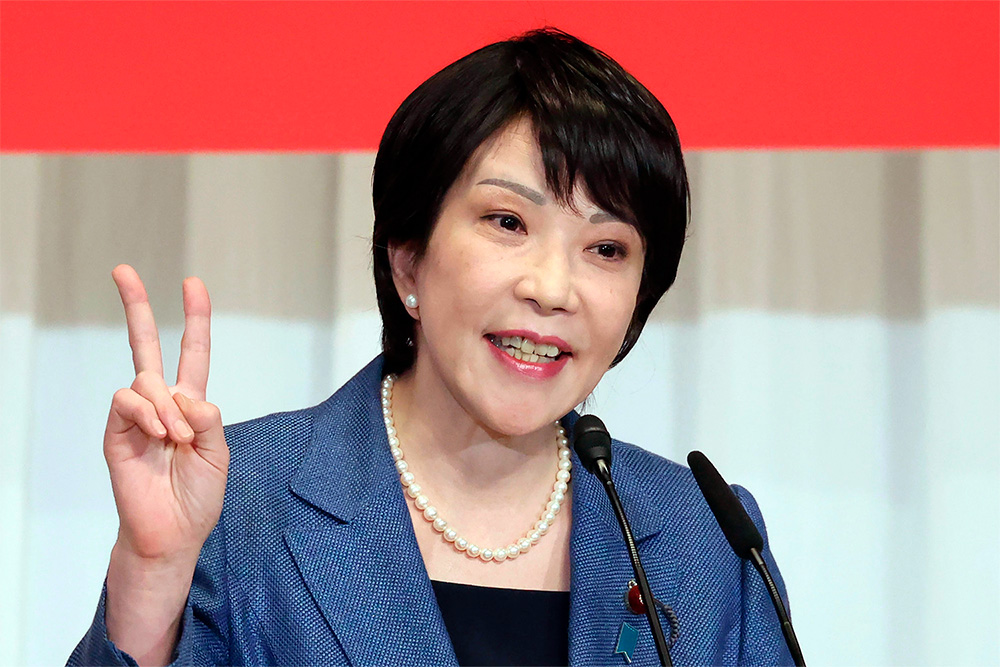 Prime Minister Sanae Takaichi. Photo: AP.
Sanae Takaichi’s main slogan is “Make Japan Great Again!” The phrase inevitably echoes Donald Trump’s “Make America Great Again,” yet there is a fundamental difference between the two. Over the past hundred years, America never ceased to be great, whereas postwar Japan, despite its unquestionable economic achievements, dutifully followed in the wake of the United States. Deprived of the right to possess nuclear weapons and even of a regular army—modestly referred to as “self-defense forces”—the Land of the Rising Sun oriented itself toward a pacifist constitution.
Generational change, however, has not passed Japan by without consequence. In the 21st century, politicians with pronounced nationalist and even militaristic views have emerged. One of them was the late prime minister Shinzo Abe. Ms. Takaichi is widely regarded as his ideological heir. She is still far from Trump in scale, but she, too, is inclined toward extravagant gestures and risky ideas. For example, in direct contradiction to Japan’s constitution, she proposed deploying American nuclear weapons on the Japanese archipelago—because, in her view, a great country must, of course, be armed to the teeth.
This stance is deeply unpopular, first and foremost, in China, which has long-standing and highly fraught disputes with Japan. Recently, these tensions even spilled over into a public diplomatic scandal. Sanae Takaichi made the incautious statement that a military crisis around Taiwan would constitute an “existential threat” to Japan and that such a threat could force Tokyo to “exercise the right to collective self-defense.”
As is well known, the People’s Republic of China regards the Republic of China (Taiwan) as an inalienable part of its territory. Although the overwhelming majority of countries do not recognize Taiwan’s independence, many maintain close informal relations with it, and the United States provides Taiwan with direct patronage and protection. For this reason, the Taiwan issue is extraordinarily sensitive for mainland China, and the Japanese prime minister’s statement looked to Chinese observers like a direct provocation.
In response to the Japanese leader’s remarks, China’s consul general in Osaka threatened on social media to “cut off Madam Takaichi’s dirty head” if she continued to meddle in affairs that were not her concern. The post was later deleted, but the scandal was nonetheless substantial. It became clear that Japan’s new prime minister was quite capable of crossing virtually any red line.
The reference to beheading was not accidental. The Chinese diplomat was clearly alluding to the notorious Nanjing Massacre during the Sino-Japanese War of the 1930s. At that time, Japanese troops slaughtered hundreds of thousands of Chinese civilians, and some soldiers even competed in beheading defenseless victims with samurai swords. The brutality of the Japanese forces shocked not only China but the entire world.
Given that Ms. Takaichi is among those politicians who regularly visit the Yasukuni Shrine, where Japan honors its war dead, including executed war criminals, the allusion was unmistakable. The scandal escalated to the point that Japanese authorities asked the United States to offer public support amid the confrontation with China. Ms. Takaichi herself, however, appeared largely unfazed.
Among the Japanese prime minister’s other priorities are the restoration of “traditional Japanese values,” tighter state control over the media, and a tougher migration policy. Notably, Sanae Takaichi does not support feminist ideas, even though her own career would seem to embody feminism’s triumph. She opposes allowing women to inherit the imperial throne, despite polls showing that 81 percent of Japanese support a woman ascending the throne. She is also against permitting married women to keep their own surnames rather than take their husbands’—even though her own husband, for reasons unexplained, bears her surname.
The result is a situation in which Ms. Takaichi herself may do what others may not. Once upon a time, Karlsson-on-the-Roof declared that there was only one truly worthy charitable cause: caring for Karlsson. Sanae Takaichi appears to think along similar lines: feminism should apply to only one person—Takaichi herself.
Former Prime Minister Fumio Kishida considered her views so far to the right that he once referred to her as “Taliban Takaichi.” There were reasons for this. In 2014, she was photographed with Kazunari Yamada, the leader of the neo-Nazi National Socialist Japanese Workers’ Party. In recent years, however, Takaichi has softened her rhetoric, preferring to describe herself as a “moderate conservative.”
Even so, this “moderate conservative” has already distinguished herself in office with a series of extravagant moves across a range of policy areas. Most notably, she attempted to jolt the national economy through aggressive fiscal stimulus. The result, however, was negative: investors grew nervous, markets wavered, the yen collapsed, and the country experienced firsthand what soon came to be known as the “Takaichi effect.”
Regardless of her political views or personal beliefs, it is clear that Sanae Takaichi is a politician with a highly driven will, a focused determination, and a readiness to go to great lengths to achieve her goals. Moreover, in public appearances, her facial expression can be intimidating to the unprepared observer—she often appears to be gritting her teeth.
At the same time, she seems to maintain strong self-control. Ms. Takaichi has led multiple government departments in Japan: she has served as state secretary for international trade and industry, senior vice minister of economy, trade, and industry, and several times as minister of internal affairs and communications. Even if she wrestles with personal demons, she knows how to conceal them effectively and channel her energy toward career and political objectives.
That said, Japan’s political system means the prime minister is not entirely autonomous and depends heavily on the ruling party. It is possible that Takaichi was put forward to implement unpopular measures and may later leave office. Regardless, leaders of Central Asia will still have to negotiate directly with her, not with anyone else.
Despite all the complexities, upcoming negotiations with Japan are unlikely to pose major problems for the Central Asian countries—at least because the Land of the Rising Sun presents itself, much like the European Union, as a responsible and civilized partner.
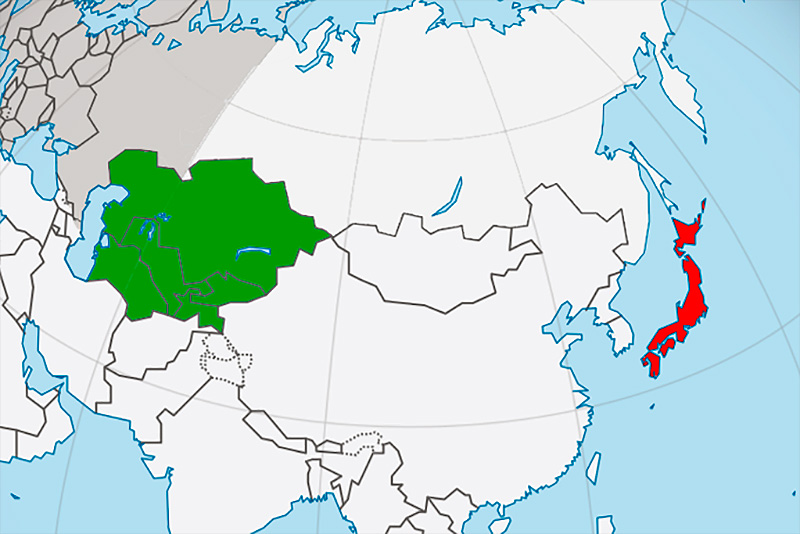 Photo: wikipedia.org
Agreements with Japan offer the region several clear benefits:
1. Diversification of partnerships. Japan’s emergence as an alternative investor and source of new technologies reduces the region’s dependence on the two dominant players in the local market—China and Russia.
2. Access to advanced technologies. From digitalization to green economy solutions, Japanese expertise can help address ecological challenges that are becoming matters of survival for the region.
3. Infrastructure financing. Japan could invest in modernizing railways, ports, water supply systems, and energy networks.
4. Investment in non-resource sectors. This includes processing, logistics, infrastructure, and human capital—particularly education programs, internships, and exchanges in public administration.
5. Strengthened political weight. Engagement with Japan may enhance the international standing of Central Asian countries.
At the same time, there are potential downsides. Large infrastructure projects could create new debts, internal competition may arise among the republics for Japanese investment, and both China and Russia may react negatively to Japan’s increasing presence in the region.
Neither China nor Russia is likely to issue ultimatums forcing the Central Asian states to choose between them and Japan. Nevertheless, Japan’s involvement is inherently inconvenient for both giants. Russia has longstanding disputes with Japan over the so-called Northern Territories and faces tension over Japan’s open support for Ukraine. China remembers the atrocities of Japanese forces historically, and the assertive policies of Prime Minister Takaichi provoke understandable irritation. Despite past efforts to convey that not all Japanese are the same, anti-Japanese sentiment remains strong in China.
In any case, cooperation with Japan is clearly advantageous and promising for Central Asia. Yet, as always, progress may be slowed by bureaucratic delays and corruption—factors that, while separate from international relations, could affect the pace and effectiveness of agreements.
-
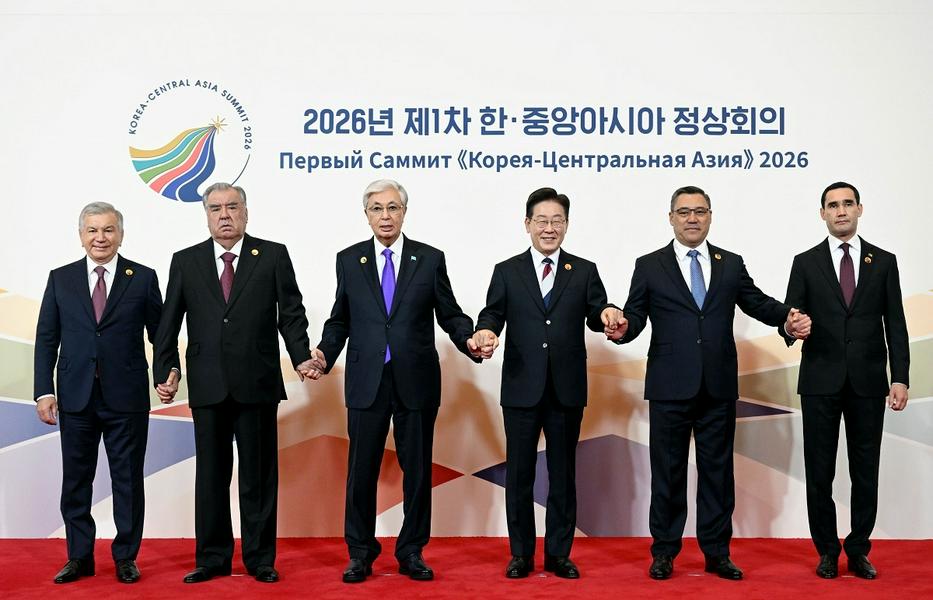 17 September17.09Summit of Morning FreshnessCritical minerals, artificial intelligence — what else was discussed at the “Central Asia–Korea” meeting
 -
 27 May27.05The Expanding Research of PT-141 (Bremelanotide) in Melanocortin Signaling
 -
 13 May13.05Video Revolution in the World of ReviewsHow an Uzbek entrepreneur is building a “YouTube for business” on the Western market.
 -
 08 April08.04World Football Needs a Forced RebootAlisher Aminov on Italy's failure, Michel Platini, the «Iran case» and chaos at FIFA
 -
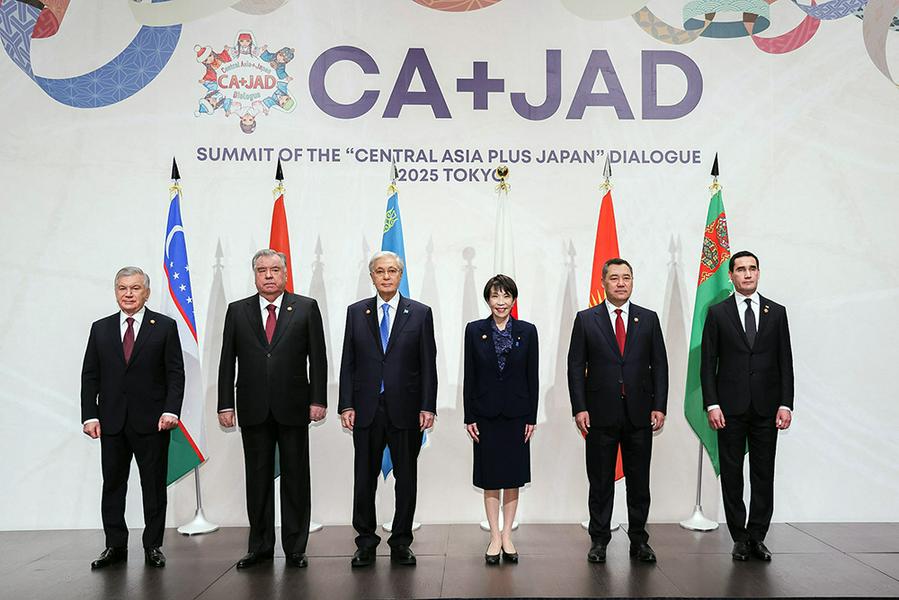 23 December23.12PhotoTokyo DriveJapan to invest about $20 billion in projects across Central Asia over five years
 -
 30 September30.09When Sea Becomes Fact of the PastWhy Tokayev Is Concerned About the Health of the World’s Largest Enclosed Body of Water
-
Why Dealing with China Is Harder Than It Seems at First Glance
-
Tashkent sends troops to Russia’s Victory Day Parade for the first time. There they took part alongside their neighbours
-

Alisher Aminov on why the World Cup should not become an indulgence for the leadership of Uzbek football
-
Alisher Aminov on Gianni Infantino's bid for a third term