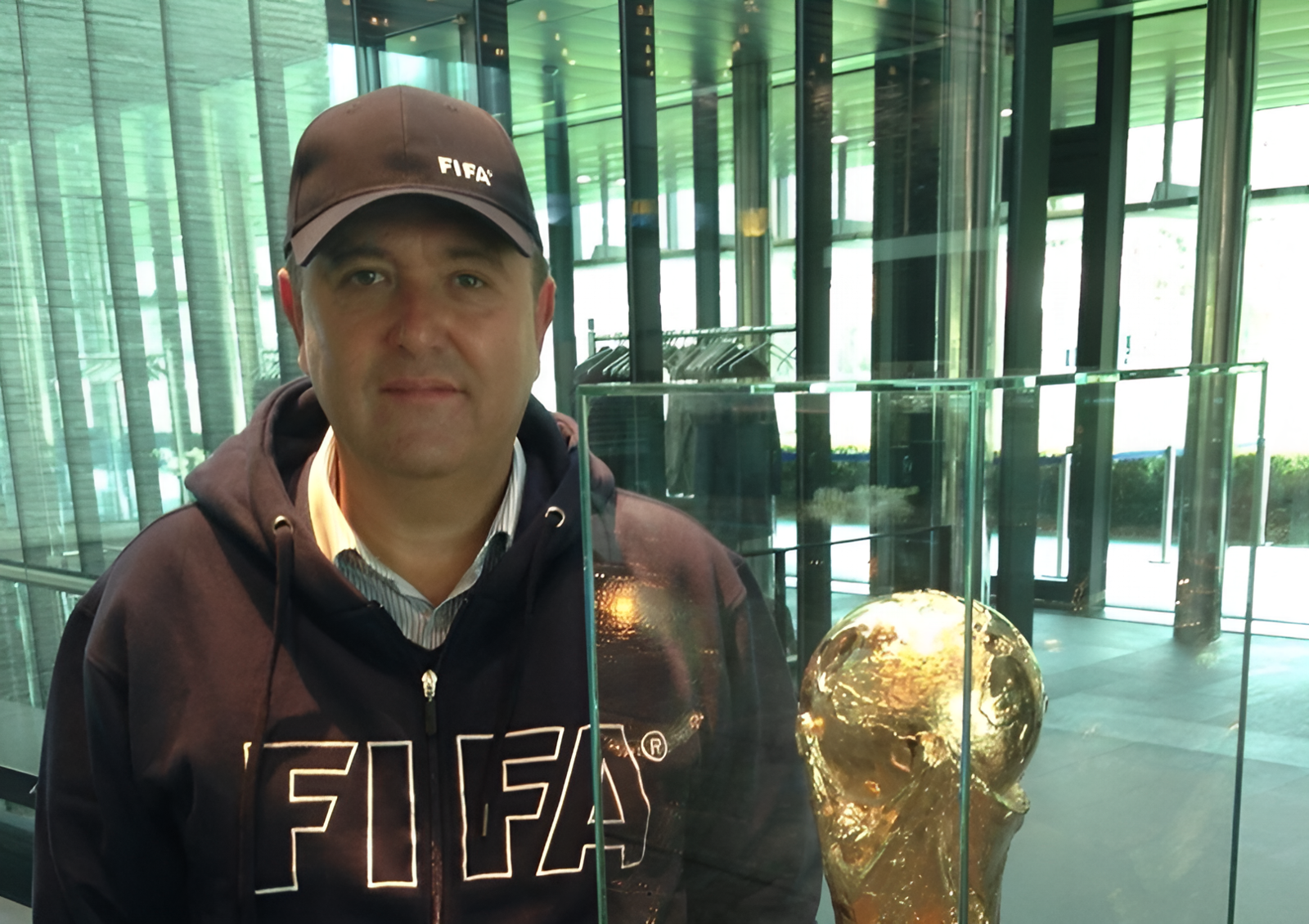
 Alisher Aminov. Photo from Alisher Aminov’s archive.
Two months remain before the kick-off of the FIFA World Cup, to be held next summer in North America. On the last day of March, all 48 participants in the tournament were confirmed, completing the roll call of world football's elite. The event is eagerly awaited across the globe — not least in Uzbekistan, whose national team will be making its World Cup debut.
Yet modern football has long ceased to be merely a game. It is a powerful instrument for shaping public opinion, a serious business, a vast pool of money, and an arena of politics. That is the thread running through our conversation with international expert Alisher Aminov, a man who always has his finger on the pulse of global events.
— How do you assess the results of the play-off matches that concluded the 2026 World Cup qualifying campaign? Were the outcomes fair, rational, deserved?
— In these situations, people usually say: look at the scoreboard — it tells you everything. You can take different views on the results, but the way football decided it is the way it is.
In my view, for instance, one should genuinely celebrate Kosovo's national team, which pulled off a sensational 4–3 victory over Slovakia in the first round. This small Balkan country was only granted the right to compete in FIFA and UEFA-sanctioned tournaments ten years ago. For a young state, football is far more than sport. Without any grandstanding: the squad — which earned the nickname «Gladiators» along the way — blazed a trail to international recognition for Kosovo. I am proud to have made my own small contribution to the development of football in that country.
In the second round, Kosovo narrowly lost to Turkey, ranked 22nd in the world. The match, held in Pristina, could have drawn 100,000 spectators, 200,000, even 500,000 — had the Fadil Vokrri stadium been some miraculous transformer. The ground's maximum capacity of 14,000 was sold out, but that crowd delivered an extraordinary atmosphere and thunderous support.
— At the opposite end of the emotional spectrum — Italy.
— Failing to qualify for the World Cup finals for the third time in a row is not a sudden catastrophe; it is a logical outcome. The crisis is systemic, because effectiveness is defined, among other things, by the ability to learn from mistakes. And that capacity is simply not in the Italian character.
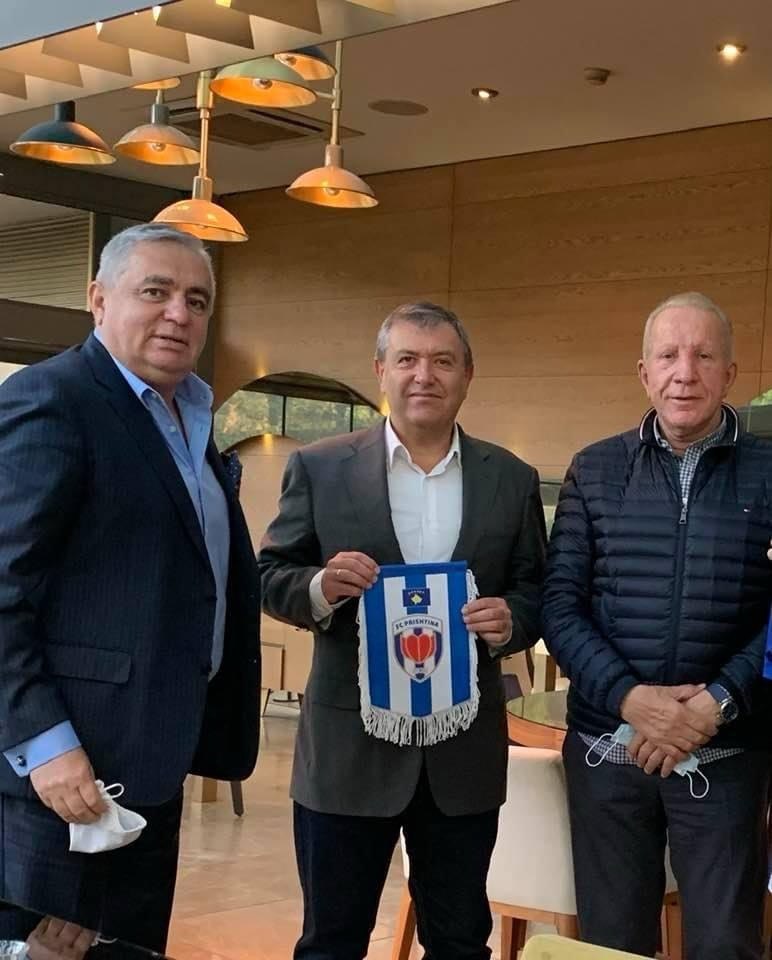 The first President of Kosovo, Behgjet Pacolli (right), owner of the Swiss holding “Mabetex”, together with FC Prishtina president Remzi Ejupi and Alisher Aminov. Photo from Alisher Aminov’s archive.
The problems of the *calcio* (Italian football — Ed.) are part of a broader governance crisis at the level of both FIFA and UEFA. When Italy failed to qualify for the 2018 World Cup, the then-president of the Italian Football Federation, Carlo Tavecchio, resigned. His successor Gabriele Gravina did not follow suit after Italy's defeat by North Macedonia four years ago and said he would wait for the federation's board to express its opinion at a meeting. He also asked head coach Gennaro Gattuso to remain in post. But the situation escalated when Gravina eventually did resign under a wave of public fury, while UEFA president Aleksandr Čeferin warned that the country risked losing its right to host Euro 2032. Hot on the heels of the 72-year-old Gravina, the legendary Gianluigi Buffon — who had been heading the national team's delegation — also vacated his post. Gattuso's fate was sealed: he was sacked.
A new federation president will be elected in June, and it will fall to him to grapple with the long-term strategic challenges facing Italian football.
— But football in Italy is something of a national religion, isn't it?
— Yes, yet the infrastructure is among the worst on the continent for an advanced football nation, elections within the governing bodies are a pure farce, and former president Gravina was a textbook product of the FIFA governance machine — a cowardly, unprincipled bureaucrat who deftly embedded himself in political and commercial networks. How does that combination sound to you?
Change for change's sake rarely delivers the desired result, and Gravina's departure will not solve the problems of Italian football any more than Tavecchio's did.
At the same time, there is nothing more futile than doing the same thing over and over again and expecting a different result. We will never know whether Roberto Baggio's proposals, put forward back in 2011, could have led to a different outcome — but the current approach is clearly not working. Perhaps the most dispiriting aspect of Italy's latest failure is that it is no longer even a crisis — it is just the same sad song, playing on repeat. Responsibility for the degradation of what was once magnificent Italian football rests with those who dutifully raise their hands at congresses and trot along on a short leash held by those in power. With those who adapt to any era and bend with the shifting winds of a world with its dubious moral compass. These people, as a rule, are perfectly content with their lot: as long as the gravy train keeps running, they have no incentive to change the system — or to change themselves.
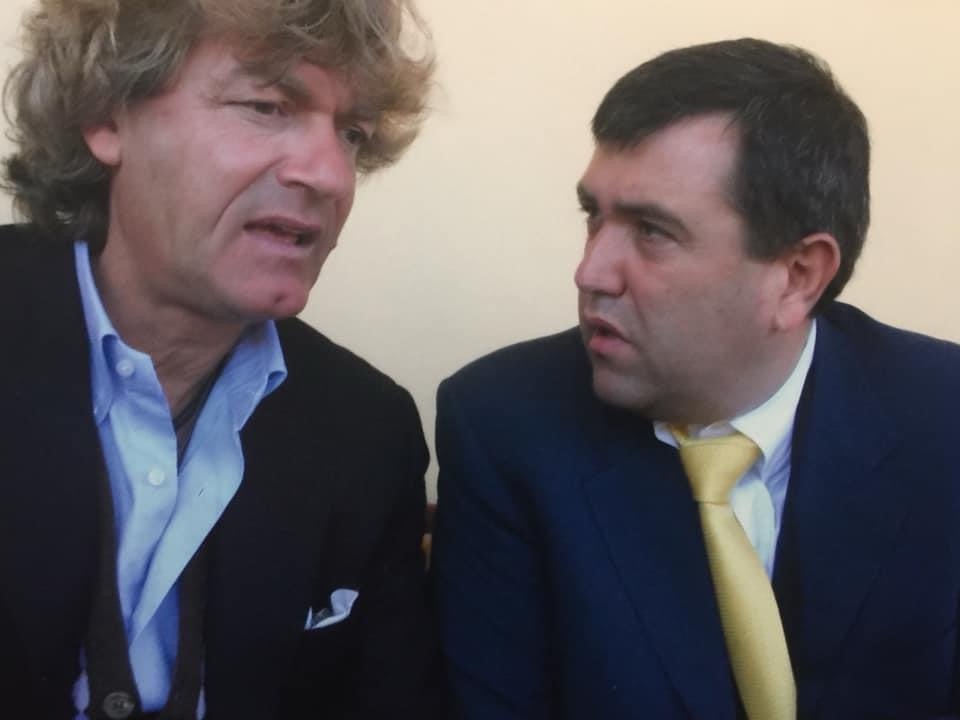 Giancarlo Antognoni. Photo from Alisher Aminov’s archive.
A simple test: reel off the squad of the *Squadra Azzurra* from ten, twenty or forty years ago — no problem at all, because the great Italy was represented by truly great men: Bettega and Tardelli, Zoff and Baresi, Altobelli and Schillaci, Rossi and Baggio, Antognoni and Bergomi, Pirlo and Buffon, Cannavaro and Totti, Del Piero and Maldini, Nesta and Chiellini — the list of stars is seemingly endless. Now: who can name the current Italy squad without hesitation? Even half of it? A quarter?
The severely limited pool of very average — by global standards — candidates for the national team is a direct consequence of the situation within Italian clubs, leagues and governing bodies.
— You mention problems with infrastructure. What exactly is wrong with it?
— The majority of stadiums, regional training bases, and the famous, once pioneering national training centre at Coverciano have long since ceased to meet modern requirements. Coverciano has already been handed a rather pointed nickname: «Grandad's garage.»
Coaching and management education programmes are running on outdated models. Both economic and sporting performance have deteriorated across the board. Serie A has stopped producing competitive players: set alongside Spain's La Liga, France's Ligue 1, England's Premier League and the German Bundesliga, its output is negligible. Italy is fairly active in the global transfer market, but increasingly as a buyer rather than a seller. It is little wonder there is an acute talent shortage and a painfully thin bench in the national team.
One very vivid and very sobering example: over 30 rounds in Serie A, Como gave playing time to just one Italian. 32-year-old defender Edoardo Goldaniga featured in two matches, accumulating a grand total of 13 minutes. Thirteen minutes in 30 rounds.
It is an extraordinary statistic, yet it tells the whole story. Como's Spanish manager Cesc Fàbregas, who understands football with rare subtlety and intelligence, simply does not have other Italians available for Italy. Whether to laugh or to cry is anyone's guess.
— Corruption charges against former UEFA president Michel Platini were dropped quite some time ago. Is he back in the game?
— Platini is torn between a desire to return to the world stage and a desire to settle scores with those who betrayed him and destroyed his brilliant career.
Michel has become quite candid in recent times about the behind-the-scenes machinations that characterise the elite of world football. That elite has long been in the service of big business and high politics, and Platini — before suffering his catastrophic professional downfall — moved in those same orbits. And felt perfectly comfortable doing so. The three-time Ballon d'Or winner once walked into the snake pit of football bureaucracy, made himself at home — and then received a knife in the back, emerging into the light of day with his reputation seriously tarnished. The not-unemotional Michel once compared himself to Icarus: he flew, he said, too close to the sun.
— The threat of a prison sentence no longer hangs over Platini...
— The past ten years have been a genuine ordeal for him and his family. I have had the occasion to meet Michel and his lawyer William Bourdon several times in Switzerland. Platini, as far as I could judge, never doubted that things would ultimately resolve in his favour — he knew it would all come to nothing in the end, and he maintained his optimism. And so it proved. But that does not resolve another question entirely: is a 70-year-old Platini capable of doing football any good? Does football need him?
— If the Platini–Blatter affair has been closed, who, in your reading, was the chief villain?
— «A group of people decided to destroy me,» Michel says. Who are these people? No names have ever been mentioned directly. Platini has hinted that Sepp Blatter, who clung to power with extraordinary ferocity and «wanted to die as FIFA president», played a significant role. At the same time, Platini does not, apparently, count Infantino — who was UEFA general secretary at the time — among the betrayers. «Gianni exploited the situation but he was not the instigator,» Platini says. «Infantino had his eye on the UEFA presidency; he was nudging me towards the race for the FIFA top job.»
The mention of Infantino inevitably steers the conversation towards the governance crisis. Some contradictions — such as FIFA's barely concealed fawning over US President Donald Trump — confirm that football politics has become even more cynical and unpredictable in recent years.
«He was a good number two, but he has not been a good number one,» Platini continues, reflecting on Infantino's trajectory. «He did excellent work at UEFA, but he has one problem: he is drawn to rich and powerful people. It is his nature. He was like that as general secretary too, but back then Gianni was not making the key decisions.»
Michel believes that modern football administrators are simply doing their jobs without putting their hearts into it. They do not care whether it is football, baseball or basketball. You do not have to love the game to run UEFA or FIFA. On this point, I agree with him entirely.
— Would those same characteristics apply to UEFA president Aleksandr Čeferin, do you think?
— Čeferin was appointed Platini's successor when the latter was suspended. The two men could hardly be more different. Platini is a towering personality — one of the greatest footballers in the history of the game, and an administrator of statesman-like dimensions. Čeferin is a modest lawyer with a relatively modest track record at the highest level.
Platini is careful not to criticise Čeferin directly, confining himself to observations such as the need for «stronger oversight of the constant bickering between UEFA and FIFA.» One senses that he mourns Europe's lost influence — UEFA always played a pivotal role in the broader balance of power, acting as a counterweight to FIFA.
Michel is convinced that the role of UEFA president will become increasingly complex in the years ahead, partly due to the growing influence of the major clubs. In his own time, Platini himself was compelled to make regular compromises so that members of the European Club Association — in whose creation he played an important role — would not be tempted to walk away. In practice, this meant, for example, that the lion's share of Champions League prize money went to the biggest clubs, which frequently earned him accusations of lobbying.
It was under Čeferin that UEFA presided over the collapse of the Super League project in 2021. But that threat has in all likelihood not disappeared, and it will only intensify over time. Sooner or later, football will get a closed league consisting of 16 to 18 wealthy, high-profile clubs. And questions about the integrity of the competitive structure — at least at the European level — will move firmly onto the agenda.
— Replacing a footballer with a lawyer in the key UEFA post is a telling signal. Football is gradually being taken away from those who actually understand it.
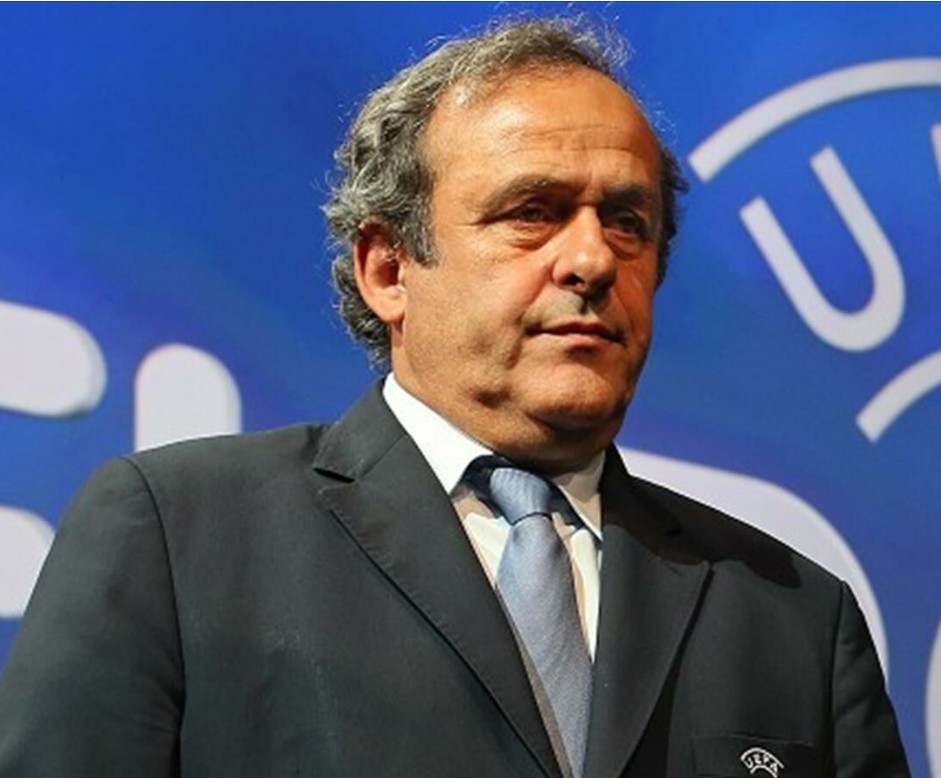 Michel Platini. Photo from the website time.kz.
— People who know what football is — who have played the game at the highest level — are a dying breed in management. That is simply the reality. And the trend is not confined to FIFA and UEFA. At the level of confederations and national associations, the picture is exactly the same.
Infantino has been re-elected as FIFA president twice without the slightest opposition. There is no candidate visible on the horizon capable of challenging Čeferin at the next UEFA presidential election. Yet even Platini, for instance, hopes that this is not a life sentence — that former players will continue to have a role in running the game. «That is exactly what I was and what I did,» he says. «It is demanding work. Not many people want to take it on. For a healthy democracy it would be better if there were genuine competition and a flow of fresh ideas. It is not just about football itself — it is about the people who govern it.»
— There is a note of sadness in Platini's words. Is he thinking about wrapping up his career?
— After the end of his ban, he was actively tipped for a role at FIFPro, the global players' union. Last year, word was circulating in European circles that Platini — even if he had no plans to return to UEFA himself — was willing to champion promising candidates. And yes, I would agree with you: Michel is becoming increasingly guarded about his own future. He has, as far as is known, several large-scale projects that are currently preventing him from returning to the operational management of the game.
— What might football have looked like under Platini's stewardship?
— Perhaps FIFA could once again have become an organisation that puts football — rather than business and politics — at the very centre of its mission. But, frankly, there is no guarantee that Platini would have cleaned up the industry or driven through the necessary governance reforms.
In any case, this can only be discussed in the conditional tense. Platini's wings were clipped at the very moment of his ascent. The «two-million franc affair» is a trifling episode by the scale of corruption that swirls around football, yet it destroyed the career of a great player and a talented administrator.
— Where does the «FIFA Gate» affair stand today?
— In December 2025, US prosecutor Joseph Nocella filed a notable motion in a New York district court. Following the legal scandal that erupted around FIFA in 2015, the court had continued to hear all claims arising from «FIFA Gate» — the sweeping corruption investigation into international football.
Several cases remain pending to this day, but Nocella — appointed to the post by US President Donald Trump a year ago — petitioned the court to permanently drop two of those cases, cloaking the request in the language of the public interest, framing it as being «in the interests of justice.»
Shortly afterwards, a further motion in support of that initiative was filed with the US Supreme Court, authored by the new Attorney General John Sauer, who had previously served as Trump's personal lawyer. The message was unmistakable: the proceedings must be wound down, because that is the will of the US authorities, who are actively reshaping the justice system. The fact that the once-rigorous and uncompromising American judicial system has begun to display tolerance towards the murkier aspects of the international football business is, of course, directly linked to the close relationship between Trump and Infantino. And this particular move carries additional significance because it came just days after Infantino presented Trump with a specially created «FIFA Peace Award.»
That episode generated, to put it diplomatically, a degree of discomfort in world diplomatic and sporting circles.
— Why?
— It is not much of a secret: we are talking about an exchange of favours. A prestigious award in return for a particular stance in proceedings against a marketing agency whose owners once struck a lucrative deal with Infantino.
— What deal?
— Full Play Group SA — a South American company that features in the case materials. The leaders of this sports rights agency over many years were the father-and-son duo Hugo and Mariano Jinkins, who appeared as defendants in the US Department of Justice's first major indictment in connection with the 2015 FIFA scandal. In a later, expanded version of the indictment, Full Play was also named directly.
The charges were a textbook «kickback» case. The Jinkins family was accused of bribing South American football officials in order to acquire broadcasting rights to major tournaments — including the Copa Libertadores — at artificially suppressed prices.
But the Jinkins clan's business operations were not confined to South America. In the mid-2000s they owned another company — Cross Trading. In 2006, that entity obtained from UEFA the rights to certain television broadcasts, which it subsequently sold on for substantial profit. The contract was signed on UEFA's behalf by its then legal director, Gianni Infantino.
In September 2006, UEFA sold the Champions League broadcast rights for South America to Cross Trading for $110,000, later adding the UEFA Cup and Super Cup rights for a further $28,000. But those rights did not remain with Cross Trading: they were promptly resold to Teleamazonas. The total value of that transaction was $450,000. The Jinkins family thus generated roughly $300,000 out of thin air — solely thanks to the contract signed by Infantino.
An indication of how murky the operation was is the fact that it was carefully concealed. When a team of Swiss prosecutors' experts approached UEFA in autumn 2016 to enquire about any relationships with individuals named in the US indictment, the official response stated that no business contacts had been recorded with those individuals over the preceding 15 years. By that point, Infantino was already serving as UEFA general secretary — the organisation's second-in-command, directly beneath Platini.
In April 2016, the publication of the so-called «Panama Papers» brought the contracts connected to Cross Trading into the open. This placed the Swiss law enforcement system in an extremely awkward position, particularly given that Infantino continued to insist that everything had been above board.
Despite this, the proceedings produced no legal consequences. The case was closed in November 2017. Infantino was not even questioned, though the initial investigation was accompanied by a series of peculiar incidents in the relationship between the then Federal Prosecutor, Infantino, and FIFA.
In 2016 and 2017, a number of unregistered, secret meetings took place involving Federal Prosecutor Michael Lauber and Gianni Infantino. What was discussed at those meetings has never been established. Yet Lauber, who was a criminal investigator at the time, subsequently lost his position precisely because of that suspicious association.
— Big games played by big men...
— The US Department of Justice, in the course of its «FIFA Gate» investigation, kept a very close eye on the Jinkins family's activities in South America. So «close,» in fact, that a request for their extradition from Argentina had been pending for years. That kind of inaction always seemed strange — and today it looks even more suspicious: the US Justice Department has consistently and carefully steered clear of the figure of the senior official who was elected FIFA president in 2016.
This is primarily a matter of the role Infantino played in transforming FIFA — an organisation that had been under Sepp Blatter's grip for a quarter of a century. However, the pivotal moment, according to the documents, is connected to an earlier period: in October 2015, UEFA general secretary Infantino — whom nobody at the time was considering for FIFA's top job — made a 48-hour transatlantic trip.
— What was suspicious about that?
— A European official travelled to New York at the height of the scandal engulfing FIFA. Infantino has said he has long since forgotten the purpose of the visit. It was officially logged as attendance at a meeting with a UEFA partner agency — but documents indicate that the meeting had already taken place the day before Infantino flew to the United States, with the then FIFA president joining via video link from Switzerland. Infantino himself categorically denies having had any contact with US Department of Justice officials during that period.
The timing of the trip, the misleading entry in UEFA's records, and above all Infantino's conduct — including his alleged memory lapses — at the very least fuel suspicion that the visit may have been directly related to the American investigation.
In any event, it was the initial zeal of the American judicial system that led to the removal of then-FIFA president Sepp Blatter from his post and the sidelining of his intended successor, Michel Platini. And that is precisely what opened the door for Infantino to become FIFA president. Since then, the relationship between the international football federation and the United States has undergone a radical transformation: the enthusiasm of US law enforcement has virtually evaporated.
In the sphere of sports politics, the turning point was definitively sealed in the summer of 2018, when the right to host the 2026 World Cup was awarded to the joint bid of the United States, Mexico and Canada. Since that moment, Donald Trump and Gianni Infantino have been firmly in the same boat. Infantino is serenely preparing for a World Cup whose majority of matches will be played in a country that once struck fear with its uncompromising approach to crimes in football — and which now displays a remarkable degree of flexibility.
As a concluding note, it is worth recording that over the course of the investigation charges were brought against almost 50 individuals. Roughly half of them pleaded guilty or were convicted — often with substantial fines, the cumulative total of which ran to nine figures.
Nothing changes in this, the best of all possible worlds. As it was in ancient Greece: what Jupiter is permitted, the bull is not.
— What position does FIFA — and Infantino personally — take on the so-called «Iran question»?
— FIFA does not start wars, but it actively participates in the construction of a political image for US President Trump. Football has thus become a complicit party — albeit an indirect one — in the bloody carnage of the Middle East. In any rational frame of reference, such circumstances would have inflicted catastrophic and irreparable reputational damage on FIFA and its leadership. A co-host of the World Cup is bombing the territory of one of the tournament's participating nations — this is absurd, a paradox. It would seem, on the face of it, simply impossible. And yet it is happening.
Because Infantino worships at the altar of Trump, FIFA's hands are soaked in blood up to the elbow. And just try washing that off now.
— World Cups have weathered organisational crises before — including tournaments being relocated to other countries.
— It is hard to imagine that the summer ahead will be smooth sailing for FIFA or for the United States. The US is striking Iran, and Iran in turn is targeting a number of other countries, including some whose national teams have also qualified for the tournament. In such a scenario, Iran's participation in the World Cup becomes, in my view, all but impossible. The Football Federation of the Islamic Republic of Iran recently stated that «no one should expect us to sit here waiting hopefully for the World Cup,» while Iranian supporters have already been barred from entering the United States.
— If Iran refuses to participate or is excluded, it would become the first country in history to withdraw after successfully completing the qualification process.
— There have been instances of countries pulling out of final tournaments, but they have almost never been politically motivated. India, for instance, once withdrew for financial reasons — unable to find the funds for the flight. The USSR squad was disqualified after refusing to play Chile following that country's military coup.
Jules Rimet, after whom the World Cup trophy was originally named, is rightly considered one of the greatest presidents in FIFA's history — both for his moral character and his diplomatic skill. One of his achievements was ensuring that, at the FIFA Congress held in Berlin during the 1936 Olympics, the right to host the 1938 World Cup was awarded to France rather than Hitler's Germany.
— That is exactly the point: it is absurd to argue that external factors do not shape the form and content of major football events. The naïve principle of «sport above politics» belongs to another era entirely.
— That which moves billions of people cannot remain outside politics. Regrettably, the moth-eaten slogan of past generations has indeed been consigned to the archive.
— The principle of political neutrality is enshrined in the FIFA Statutes, is it not?
— It is. And yet this is Infantino's conscious choice — to follow in the wake of a powerful patron, presenting him with gifts: first a «FIFA Peace Award,» then a replica of the World Cup trophy. It follows that the weapons whose fire is reducing Iranian homes to rubble are, at least in part, financed by the World Cup organisers and by Gianni Infantino personally.
We are witnessing a textbook example of how authoritarian regimes operate. How elites camouflage their actions behind an information fog. How the media landscape is dumbed down and hollowed out. How His Majesty football is transformed into a deck of marked cards in someone's nimble hands.
But history always renders its just verdicts. Infantino will not escape his.
— According to those same FIFA Statutes, Iran would face disciplinary measures if it withdraws from the tournament unilaterally.
— Undoubtedly. FIFA member associations are prohibited from withdrawing from competitions. Sanctions may include a ban from future competitions under the organisation's auspices. In addition, a fine of between €275,000 and €555,000 is levied — depending on the date of withdrawal. The matter would also be referred to FIFA's Disciplinary Committee, which has the authority to impose additional sporting sanctions.
— Who, in your view, could take Iran's place?
— Most likely the team that finished immediately below them in the Asian qualifying standings. That candidate would be the UAE, which finished third in the qualifying group behind Iran and Uzbekistan.
— The Iranian Football Federation, as far as is known, is exploring an alternative: having its group-stage matches relocated to Mexico.
— Yes, IFF president Mehdi Taj published a post on the X account of Iran's embassy in Mexico, stating: «We are in talks with FIFA about holding the matches in Mexico.» FIFA's press service responded in the language of diplomacy: «FIFA maintains regular contact with all associations, including the Islamic Republic of Iran, and hopes that all teams will compete in accordance with the announced match schedule.»
Sources within FIFA note that relocating Iran's matches would indeed create serious logistical difficulties for the other national teams involved, and commercial headaches too — tickets have already been sold, broadcast schedules are locked in, and sponsorship agreements have been fully signed off.
In Group G, Iran's opponents are Belgium, Egypt and New Zealand. A further complicating factor: if Iran progresses, they could potentially face the United States in the round of 32. FIFA will go to considerable lengths to prevent that particular encounter. By what methods, one can only speculate.
— FIFA, it turns out, is caught between two fires.
— Which is precisely why a decision on Iran is unlikely to be taken before the FIFA Congress in Vancouver, scheduled for 30 April. For the time being, FIFA continues to advocate for Iran's full participation. We watch and wait.
— What role did FIFA play in the scandalous decision by the Confederation of African Football, which stripped Senegal of the continental title and awarded it to Morocco?
— To properly assess this unprecedented move, one needs to look back a little. Africa is such a delicate matter that the complexity of the East pales in comparison.
Those who have followed African football with reasonable attention will remember February 2020. Members of CAF's Executive Committee, along with other senior figures — including George Weah, the 1995 Ballon d'Or winner and, at the time, President of Liberia — gathered in Rabat, Morocco, for a seminar. It was there that Infantino set out his plan for reforming the competition calendar and modernising infrastructure.
Beyond raising refereeing standards and attracting investment, the FIFA president proposed staging the Africa Cup of Nations every four years rather than every two, describing the existing system as «useless.» His argument: the new approach would be more commercially lucrative and help elevate African football to a new level. «Let's show the world what we are capable of. This day marks the beginning of a new chapter in the history of African football!» Infantino declared.
Six years have passed, and the president has now got his way: from 2028, the tournament — which has traditionally caused significant headaches for European top-flight leagues due to its timing in the middle of the domestic season — will shift to a four-year cycle.
European clubs, who feed very actively on the African market, as do coaches, managers and agents, are of course delighted by this revolutionary decision. But in Africa itself, concerns are growing that the continent has been sold out: historically, around 80% of CAF's revenues came from this very tournament.
The key figure in implementing Infantino's agenda is considered to have been CAF general secretary Véron Mosengo-Omba — an old university friend of the FIFA president's from their days studying law together in Fribourg, who was frequently accused of running the confederation as his personal fiefdom and of fostering a toxic culture of fear in which staff were valued not for their professional ability but for their loyalty and devotion.
At the end of March, Mosengo-Omba resigned — against the backdrop of the scandalous ruling to strip Senegal of their title. His florid farewell speech left an impression on, one suspects, nobody beyond certain African grandmothers: «After more than 30 years of an international professional career dedicated to promoting football in its ideal form — uniting people, educating and giving hope — I have decided to step down as CAF general secretary. Now that I have been able to dispel the suspicions that certain people attempted to cast upon me, I can leave with a clear conscience and without any constraints, leaving the confederation more flourishing than ever.»
Meanwhile, the management of IMG — the sports marketing company competing with ISM, another major player, for an eight-year contract with CAF — had publicly expressed full confidence in the general secretary on multiple occasions. The switch away from a biennial Africa Cup of Nations also raises serious questions about CAF's ability to request $1 billion in its negotiations with IMG and ISM, since the original deal terms were directly contingent on the two-year tournament format.
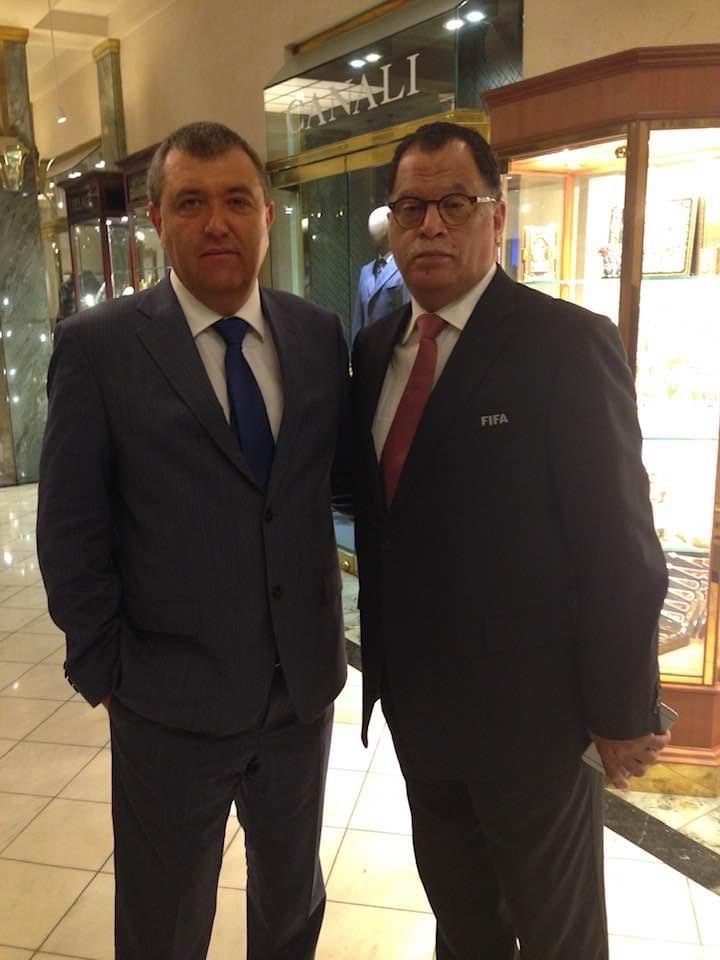 Alisher Aminov and Danny Jordaan. Photo from Alisher Aminov’s archive.
— Trimming the international calendar is a worthy aim. Players and coaches have long complained about its punishing density.
— It is precisely in this context that Patrice Motsepe — South African lawyer, entrepreneur, philanthropist and, by way of additional occupation, CAF president — has faced accusations of weakness. Of being incapable of resisting pressure from FIFA. Of allowing African football to be run from Zürich. «I fought, but I had to face reality and reach a compromise,» Motsepe countered. «We want African footballers to stop finding themselves caught in a conflict between their clubs and their national teams, as so often happens.»
The 2026 Africa Cup of Nations final between Senegal and Morocco — «replayed» months later in the corridors of power — vividly illustrates the intractable conflicts confronting modern African football in the face of external pressure.
Without dwelling on the details of the match itself — which took place on 18 January 2026 — I will simply note that Senegal were declared champions at the time, and many viewed that outcome as a victory for justice and integrity. Yet in mid-March, CAF's appeals body overturned the verdict, citing the regulations.
Notably, at the initial CAF disciplinary hearing, the governing body imposed fines of more than $1 million on players and officials from both Senegal and Morocco and suspended them from competition — but left the match result unchanged. Subsequently, however, it was announced that Senegal were to be stripped of the title, as the Senegalese Football Federation's conduct had violated Article 82 of the Africa Cup of Nations regulations.
— The long arm of FIFA at work?
— FIFA is effectively a monopoly in the governance of football — and that is its fundamental problem. In possession of the exclusive authority to draft and enact legal norms, the Big Office frequently disregards the very rules it has written. As a consequence, arbitrariness at the national level has become entirely commonplace.
The reputation of Gianni Infantino — who has seized unchallenged control of FIFA — is far from spotless, yet he continues, with single-minded purpose, to plunge the organisation itself, and the confederations and national federations affiliated to it, into a state of deep crisis. At no point in the history of world football governance has FIFA gathered under its umbrella so many compromised figures as it has during Infantino's tenure.
The shockwaves produced by the failure of the key actors in the game — the national associations — to fulfil their functions have exposed the deep-rooted problems of the global system. The de facto head of world football treats the sport essentially as a commodity, selling it wholesale and retail, acting in each new situation not according to the rules but according to unwritten private arrangements, according to the law of the jungle.
This is the root of the systemic problems: the principles of separation of powers are ignored, requirements for transparency and openness in electoral procedures are breached, neutrality in political and religious matters is abandoned, methods of direct interference in decision-making are deployed, double standards are applied. And on and on and on.
— The picture you paint is an awfully bleak one...
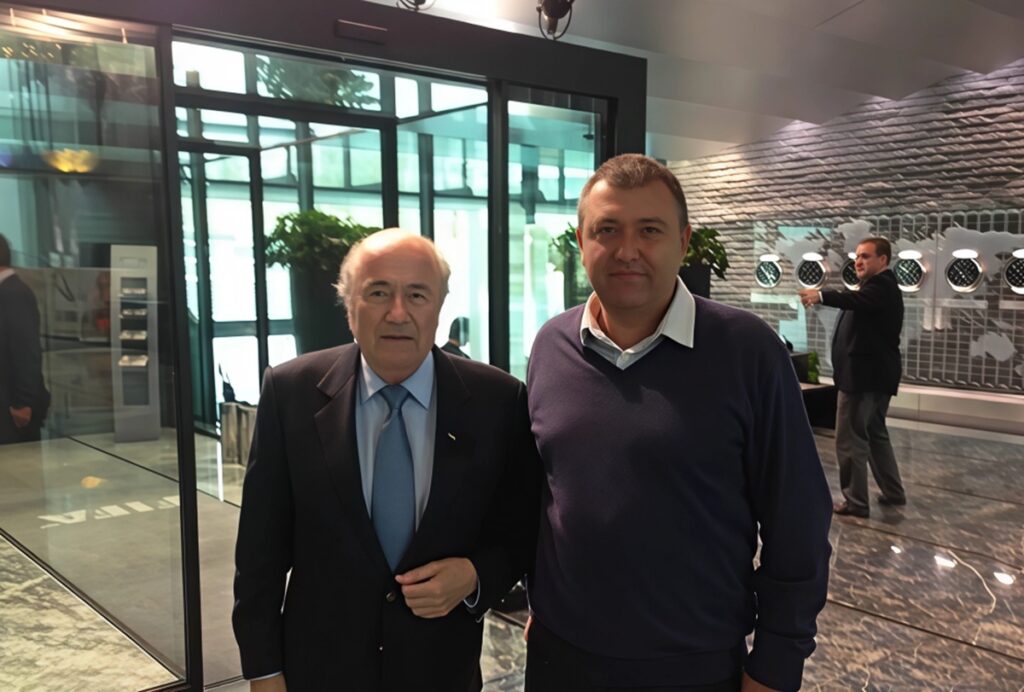 Alisher Aminov and Sepp Blatter. Photo from Aminov’s archive.
— Modern professional football operates on the principle of a giant food chain: at the top, the unrestricted consumption of resources; a little lower, a struggle for survival; at the very bottom, gradual extinction.
In my view, the root cause lies in the fact that in many ostensibly prosperous countries, football associations are entirely beholden to the political or financial establishment. Put simply, athletes are assigned the role of performers: «Your job is to play and ask no questions — we'll take care of the funding.»
Such distortions have long become the norm in football's reality. FIFA and the continental confederations elevate the interests of elites to primacy, relegating all others to supporting roles — though their primary statutory obligation is to protect competition grounded exclusively in sporting merit.
— One would like to think that the world football community stands on the cusp of transformation.
— As paradoxical as it may sound, economic and political crises may, in the long run, prove beneficial for world football. Under the previous, gradual mode of the system's functioning, resolving the many accumulated contradictions would have taken long years — even decades. But the impact of unforeseen global factors is capable of dismantling obsolete models in a comparatively short time and triggering genuine qualitative transformation.
There is no doubt that the world football movement is in need of a forced reboot. Voices raised against the FIFA president's style of governance were previously fairly distinct; they are now becoming dominant.
Maintaining Infantino's image as the guardian of enduring values has proved impossible. Yet it is important to understand: a radical reform of FIFA would be catastrophic for Infantino personally and for his inner circle — which is why the resistance will be fierce.
— Expanding the World Cup field to 48 teams is cut from exactly that cloth: «all for you, dear humanity!»
— The decision is being sold as a step that makes the tournament «more attractive for investment.» Fair enough — but it is self-evident that it substantially strips the World Cup of its uniqueness and its sporting tension. The intensity of the experience is diluted, even as the volume of content consumed grows.
Honorary President of the Russian Football Union Vyacheslav Koloskov put it well: 48 teams is no longer a World Cup — it is a football festival. One only has to glance at the composition of the groups to understand that genuinely high-quality football will not be on display before the round of 16 at the earliest. But for FIFA — and for Infantino personally — money is the primary driving force in the great endeavour of «developing the game across planet Earth.»
— What lies in store for world football in the near term from a legal standpoint?
— In the broadest of terms: a global organisational crisis is a very real prospect. There are serious doubts about professional football's ability to formulate and ratify a coherent anti-crisis plan to navigate the current situation.
Legal and financial instability will become one of the industry's defining challenges in the near future. In American leagues, for example, club owners and the powerful players' unions generally find their way to a compromise; in European, Asian, African and Latin American football, the mechanisms of dialogue are structured entirely differently.
As far as the territory of the former Soviet Union is concerned, the prognosis looks even more sobering. Professional sport in this region is chronically loss-making. It functions on the principle of a black hole, funded primarily through state subsidies or sponsorship injections — frequently coerced ones. What would happen to Russian football, say, if the regime of international isolation were to drag on for years? Who would continue to foot the bill for the impossibility of competing in international tournaments, and in whose name? How would the enormous costs be accounted for?
Regrettably, the entrenched «ostrich posture» embedded in the management mindset prevents these questions from being put to government level for serious, systemic discussion. The football establishment has long assumed — and not without reason, since it has no other historical experience to draw on — that «the master will come and sort everything out.»
Well, in all likelihood, that is precisely what will happen: someone will come, judge, and decide. The only question is: who will that master be — and what decisions will he make?
-
 14 February14.02From Revolution to Rupture?Why Kyrgyzstan Dismissed an Influential “Gray Cardinal” and What May Follow
 -
 23 December23.12PhotoTokyo DriveJapan to invest about $20 billion in projects across Central Asia over five years
 -
 17 December17.12Sake for SixCentral Asia’s Rapprochement with Japan Comes with Hidden Pitfalls
 -
 17 December17.12Gulshan Is the BestYoung Uzbek Karateka Becomes World Champion
 -
 24 November24.11Here’s a New TurnRussian Scientists Revive the Plan to Irrigate Central Asia Using Siberian Rivers
 -
 01 November01.11Catching Up with UzbekistanAlisher Aminov on the Problems of Kazakh Football and Plans to Fix Them
-
What has Samarkand accomplished in its three thousand years of existence?
-
Russia Approves New Migration Policy for 2026–2030
-
KFF Secretary General David Loria on the expansion of the Premier League, the new national team coach, and Tokayev’s role in Kazakh football
-
Gela Shekiladze sums up three years in Tajik football