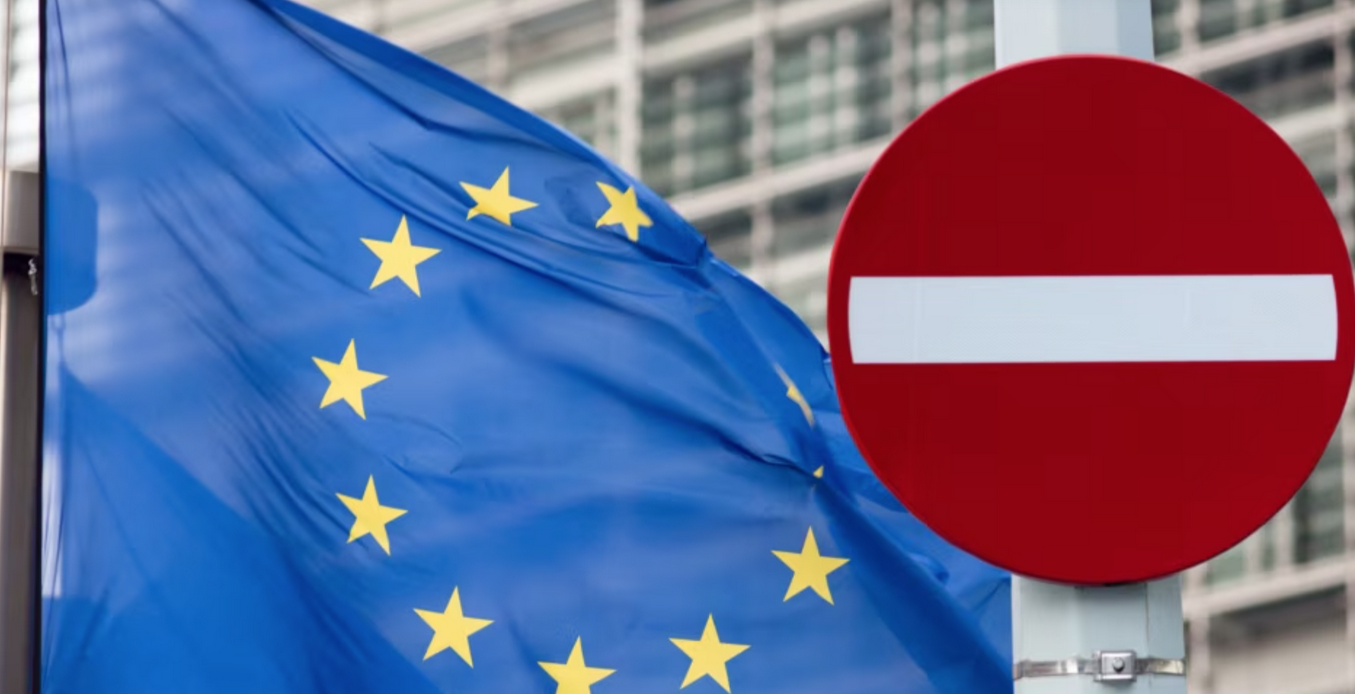
The new 20th package of EU anti-Russian sanctions, approved by the EU Council, includes the Kazakh company United Trading Group and its director Alimzhan Bekov, Kazakh media reported. Brussels accused the firm and its head of systematically circumventing the sanctions regime and organizing the re-export of chemical raw materials to Russia.
The story of United Trading Group reads almost like a textbook case of how grey trade with a country at war actually works. According to Kazakh open registries, the company has just one employee drawing a minimum salary of 85,000 tenge — yet it paid taxes wholly disproportionate to such a modest payroll. EU investigators found that Bekov represented the interests of a German firm and built supply chains for chemicals that ultimately reached the Russian military-industrial complex.
Two other figures named in the new package are Dmitry Malyuta and Denis Shishkin, accused of organizing shipments of Kazakh cotton cellulose used in gunpowder production for the Russian military.
Personal sanctions were also imposed on Azret Bekkiev, an Almaty native and First Deputy Director General of the United Instrument-Making Corporation — a subsidiary of the Rostec state conglomerate that produces automated control systems for military hardware.
This is neither the first nor the only instance of Kazakh entities appearing on Western sanctions lists. In February 2025, under the 16th package, the companies Kazstanex and MetallStan were restricted — again for supporting Russia's defense industry. In total, 16 of the 58 companies linked to the Russian military-industrial complex in the 20th package are registered in China, the UAE, Uzbekistan, Kazakhstan, and Belarus.
Astana has long found itself in an acutely awkward position: Kazakhstan has officially declined to join Western sanctions against Russia and has no plans to do so — yet individual Kazakh entrepreneurs clearly see the situation as a business opportunity. As early as January 2025, EU Special Envoy for Sanctions David O'Sullivan made a special trip to Astana to deliver a warning: companies for which «irrefutable evidence» of sanctions circumvention exists will be listed regardless of diplomatic ties. The 20th package has made clear that those words were not empty.