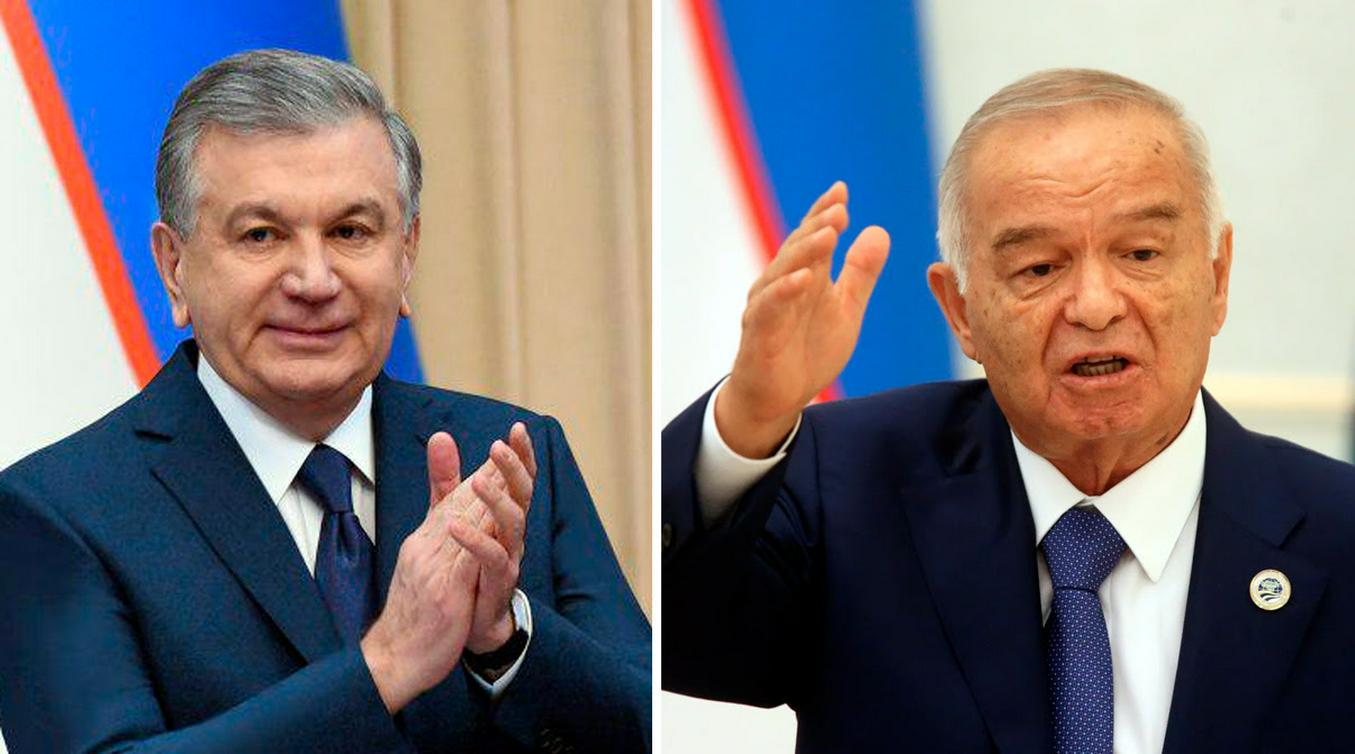
President Shavkat Mirziyoyev has set a target of raising annual remittances sent home by Uzbek labor migrants to $50 billion, Gazeta.uz reports. He spoke on November 2 at a government meeting on labor migration priorities.
«Just as we aim to increase exports to $70 billion, we must also ensure that $50 billion reaches households each year through this channel,» the head of state said.
According to the president, the number of Uzbek citizens working abroad has halved over the past decade, while total remittance inflows have quadrupled. He noted, however, that this growth was achieved solely through the migrants' own efforts.
«Today, the state has nothing to do with the $20 billion in remittances that our migrants send home. They achieved everything on their own, completely unaided. I will not back down until we bring this figure to $50 billion,» Mirziyoyev declared.
He criticized the performance of ambassadors, regional governors (khokims) and vocational college directors, saying only the governor of the Kashkadarya region had delivered tangible results after personally visiting Germany. The president demanded that migrants earn at least $2,000 a month abroad.
«If it doesn't bother you that our citizens are working abroad for $400, it offends my pride,» Mirziyoyev said.
According to his data, regional disparities in remittance inflows remain stark. In the Fergana region, monthly remittances average $1,850 per migrant worker, while in some other regions the figure falls below $400. Governors, diplomats and vocational school leaders were ordered to revamp their approach to training citizens for high-paying jobs and to step up foreign-language instruction.
The president noted that around 200,000 young Uzbeks have earned English-language certificates, yet their employment potential in English-speaking countries remains underused. He stressed the need to expand job opportunities in the United States, Canada, Australia, New Zealand and elsewhere.
«Every ambassador must ask themselves daily: what will I do for my homeland today?» the president said.
He urged ambassadors to go beyond signing employer agreements and to actively secure quotas, work visas and recognition of qualifications. Working alongside regional governors, diplomats will share responsibility for the entire journey, from overseas job placement to on-the-ground adaptation.
The meeting also addressed the protection of migrants' rights. Uzbeks facing hardship abroad will be able to file requests through the Online Mahalla digital platform, with ambassadors intervening directly if needed. Governors were tasked with supporting the families, parents and children of citizens working abroad.
«Not a single compatriot working abroad should be left alone to face their struggles,» Mirziyoyev emphasized.
At the same meeting, the president praised labor migrants as «truly courageous people» and reiterated that defending their rights is both a duty and an obligation of the state. An excerpt of his remarks was shared on Telegram by Aziza Qurbonova, first deputy head of the Communications Department of the Presidential Administration.
«Every one of our compatriots working abroad is a genuinely courageous person, toiling tirelessly for the welfare of their family and the future of their children. They are our citizens, our children. Protecting the rights of our people, regardless of where they work, is an enduring duty and responsibility of the state,» Mirziyoyev emphasized.
Background: a shift in tone
His stance stands in stark contrast to the way Uzbekistan's first president, Islam Karimov, once characterized migrant workers.
«Whom do I consider lazy? Those who travel to Moscow to sweep its streets and public squares. What haven't they seen there... People begin to look down on the Uzbek nation when they see our folk willing to do anything for a crust of bread. After all, nobody in Uzbekistan is starving to death! Chasing quick riches, they [labor migrants] head there and bring shame upon us all. <…> That is why I call them lazy: hoping to make fast cash, they go there and disgrace us all,» Karimov declared in June 2013 during a meeting with farmers.
He made those remarks even though in 2013 alone Uzbekistan received $6.7 billion from Russia, where most Uzbek labor migrants were concentrated at the time. Remittances accounted for roughly 8% of the country's GDP, which stood at around $82.6 billion that year.
After Mirziyoyev came to power in 2016, Tashkent's approach shifted dramatically. The authorities recognized migrants' vital economic value and committed to institutional support. They established dedicated agencies and relief funds to assist workers abroad, while officials began facilitating overseas employment and helping returnees reintegrate at home. The government also promised to count foreign employment toward state pension records and offered various social incentives.
In 2025, Uzbekistan received $18.9 billion in remittances, roughly 13% of its $145 billion GDP. In the first half of 2026, incoming transfers reached $9.3 billion, up 13% from $8.2 billion a year earlier and nearly triple the $3.3 billion received in 2021.