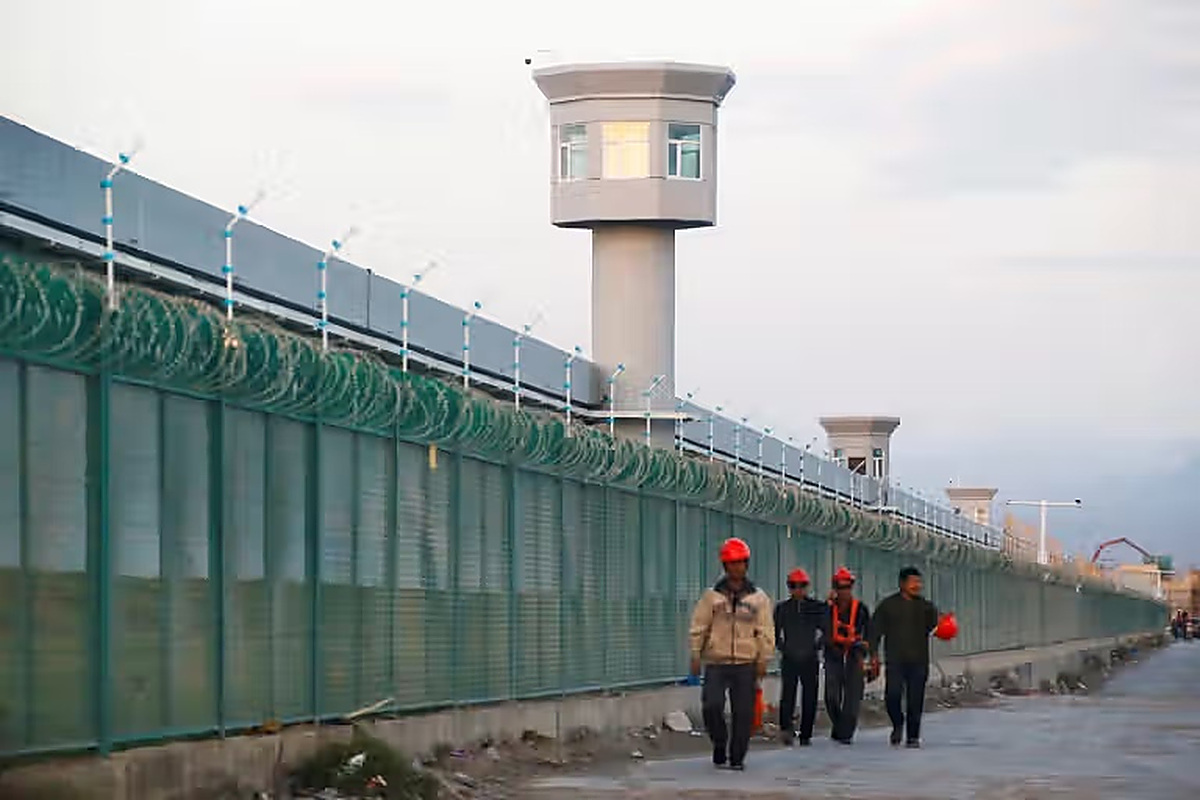
 The Afghan-Chinese border. Photo: Afghanistan International
In early November 2026, twelve memorandums of cooperation were signed at the Turkmen-Chinese Business Forum in Shanghai. Among the presented projects was the construction of a highway and logistics facilities intended to link Turkmenistan with neighboring Afghanistan. China is keen to expand trade with the country and build transport infrastructure to access its market. Yet just a month earlier, the Taliban had opened a road leading directly to the Chinese border, having spent roughly $5.5 million on its construction. But instead of cargo trucks and an operational border checkpoint, they were met with barbed wire and a sealed frontier.
China and Afghanistan share a border, and motor roads now approach it from both sides. Beijing has both the capital and the technology to establish direct transport links, yet it continues to rely on transit routes through Central Asia. Why is China prepared to cultivate ties with the Taliban, yet hesitant to open its own border to them? And could the extra transit costs simply be the price Beijing pays to keep Xinjiang secure?
To Afghanistan via Turkmenistan
At the business forum held on November 6–7 in Shanghai, the Turkmen company Ojar Aziya presented several transport infrastructure projects directed toward Afghanistan. Among them are the construction of the 450-kilometer Serakhs–Mary–Serkhetabat highway, designed to connect Turkmenistan’s Iranian and Afghan borders, and a logistics complex in the Afghan town of Torghundi with a projected capacity of up to 2.4 million tons of cargo per year.
The company also plans to build a facility in border-town Serkhetabat complete with parking for 200 trucks, a grain elevator, and a flour mill. These projects were initially presented back in October at an exhibition in Kabul and have now become the subject of negotiations with Chinese businesses. Following the forum, Ojar Aziya signed four memorandums, including deals with firms operating in international logistics, investment, and heavy machinery supply.
Transport links between China and Afghanistan via Central Asia are already taking shape. In May 2026, TOLOnews reported on the establishment of a multimodal corridor along which Chinese freight travels by rail through Kazakhstan to Uzbekistan, is transferred onto trucks, and then delivered via Turkmenistan to Herat, Afghanistan. The route spans approximately 7,400 kilometers, with an estimated transit time of around 30 days.
Another route runs through Kazakhstan and Uzbekistan to Hairatan, Afghanistan. On October 23, Fergana reported the dispatch of a dedicated freight train from China’s Shandong province along this corridor. Carrying goods valued at approximately $1.1 million, the train was scheduled to reach Afghanistan in roughly 20 days. Earlier, another train from China’s Jiangsu province delivered over 2,000 tons of cargo worth more than $20 million to Hairatan in 12 days.
Chinese goods are thus entering Afghanistan along several corridors, and the transport infrastructure of neighboring states provides ample room to scale up shipments. In theory, Beijing and Kabul could bypass third-party transit countries altogether: they share a land border. What is more, Afghan authorities recently attempted to turn that frontier into a functional transport corridor.
The road that ends at barbed wire
On October 4, 2026, the Taliban government formally inaugurated a vehicular road to the Chinese border through the Wakhan Corridor. Construction cost 365 million afghanis—roughly $5.5 million. For a country grappling with severe economic hardship, this was a significant outlay, particularly given that the new road traverses one of Afghanistan’s most remote and rugged regions.
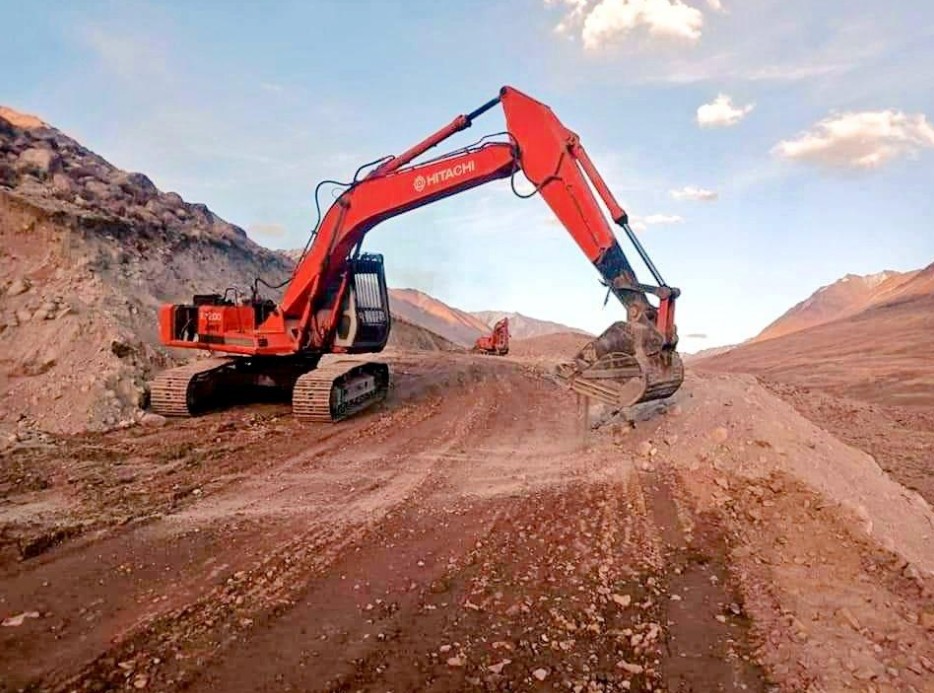 Road construction. Photo: Afghan Ministry of Public Works
As TOLOnews reported, the 121-kilometer road was built in two phases. The route incorporates four bridges, 66 culverts, and over three kilometers of retaining walls. Minister of Rural Rehabilitation and Development Abdul Latif Mansoor placed special emphasis on the fact that the project was carried out entirely by Afghan engineers without foreign assistance. That said, the route is not a modern highway, but an unpaved gravel track ill-suited to heavy commercial freight amid harsh alpine winters.
The Wakhan Corridor is a narrow strip of Afghan territory stretching approximately 350 kilometers, wedged between Tajikistan to the north and Pakistan to the south. To the east, it abuts China’s Xinjiang region. In the late 19th century, this geographic panhandle became a buffer zone separating the Tsarist Russian and British empires. The empires vanished, but the border remained, leaving Afghanistan and China direct neighbors.
Their shared frontier extends roughly 80 to 90 kilometers across the high altitudes of the Pamir Mountains, with the primary passage being the Wakhjir Pass at an elevation of around 4,900 meters. In winter, the area is buried in snow, with travel hampered by avalanches and sub-zero temperatures. Still, geographic hurdles are far from insurmountable for modern road-building engineering.
A Chinese road on the Xinjiang side has existed for years. Researchers at the Tearline project, who analyzed satellite imagery of the area, determined that it already reached border installations as far back as 2017. Security barriers and surveillance outposts were also erected on the Chinese side. In short, Beijing secured vehicular access to the frontier long ago, but deliberately refrained from opening an international crossing.
By October 2026, a road had appeared on the Afghan side as well. Radio Free Europe/Radio Liberty published a satellite image dated October 11 showing that the Taliban’s road terminates just dozens of meters from the Chinese border barriers.
Yet the anticipated opening of the border never materialized. China sent no delegates to the ceremony and made no announcements regarding a commercial border crossing. The new road ran squarely into Chinese border fortifications, surveillance cameras, and concertina wire.
For Kabul, direct overland access to China carries political weight as well as economic significance. As a landlocked country, Afghanistan relies heavily on transit routes through neighboring states, chief among them Pakistan. In October 2025, armed clashes between Afghan and Pakistani forces prompted the closure of key border crossings, disrupting trade and stranding cargo. Direct access to the Chinese market would allow the Taliban to curb their dependence on Islamabad and bolster their bargaining power.
This dynamic was highlighted by analyst Shadi Khan Saif in an October 15 analysis for Australia’s Lowy Institute. Even if the new road holds limited commercial utility at present, it potentially broadens Afghanistan’s leverage in dealing with both China and Pakistan. Yet transforming Wakhan into an international trade corridor requires Beijing’s consent, and Chinese authorities have made clear their priorities lie elsewhere.
Why China hesitates to open the border
At first glance, Beijing’s posture appears contradictory. Chinese corporations are discussing investments in Afghanistan, state entities are deepening ties with the Taliban administration, and commercial firms are eager to deliver goods and tap into neighboring mineral wealth. Yet when it comes to establishing direct transport links, Chinese authorities proceed with palpable caution.
A primary concern is security in the Xinjiang Uyghur Autonomous Region, which borders Afghanistan directly. For years, Beijing has voiced alarm over the activities of Uyghur militant groups, notably the East Turkestan Islamic Movement (ETIM) and its affiliated factions operating under the banner of the Turkistan Islamic Party. Chinese authorities fear that Afghan territory could serve as a staging ground for attacks or infiltration into Xinjiang.
In August 2025, Chinese Foreign Minister Wang Yi visited Kabul and met with Taliban Interior Minister Sirajuddin Haqqani. According to an official readout from the Chinese Foreign Ministry, Wang urged Afghan authorities to take decisive action against ETIM and other international terrorist organizations, while endorsing the resumption of joint patrols in the Wakhan Corridor.
Haqqani assured the Chinese minister that Afghanistan would not allow its soil to be used to compromise China’s national security. However, Taliban pledges have not dispelled doubts over their ability to police the country’s remote, mountainous terrain. A United Nations report, cited by RFE/RL, noted the presence of ETIM militants in Afghanistan’s Badakhshan province, through which the road to China runs. While analysts debate the exact strength and operational reach of Uyghur armed groups in Afghanistan, for Beijing, even the mere possibility of a cross-border threat is a matter of paramount concern.
Opening an international border crossing would not, of course, grant Afghan nationals unimpeded entry into China. Beijing could enforce a stringent visa regime, restrict the movement of foreign truck drivers, or mandate cargo transshipment directly at the border line. Even so, doing so would require an entirely new customs and border control infrastructure capable of processing continuous flows of people and goods.
And that is only the Chinese side of the equation. On Afghan soil, carriers would have to navigate a gravel mountain track wholly unprepared for sustained heavy vehicle traffic. Hauling goods onward to Kabul and other major urban centers would require extensive development of the domestic road network. Furthermore, operators would have to factor in seasonal closures, the risks of ambushes and kidnappings, and the steep costs of security escorts and freight insurance.
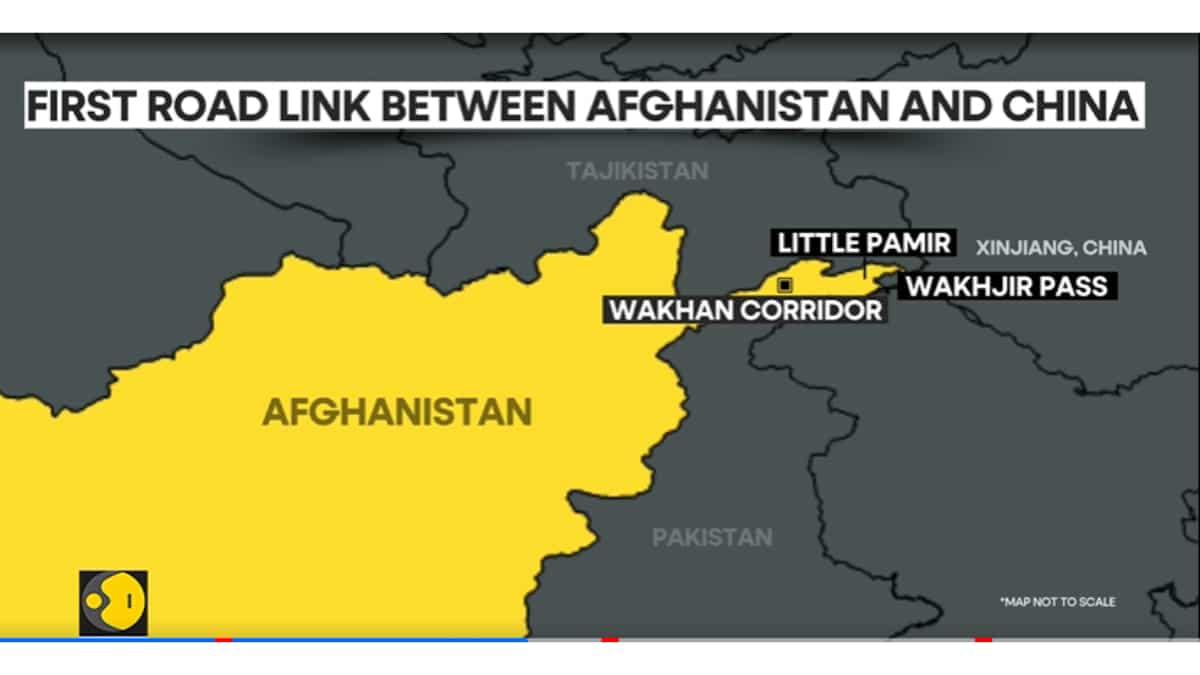 Photo: wionews.com
Even if Chinese enterprises were to finance a modern expressway through Wakhan, they would still have to tackle transit security on Afghan soil. Building a road is far easier than guaranteeing its uninterrupted, safe operation over decades.
Zhu Yongbiao, director of the Center for Afghanistan Studies at Lanzhou University, described the likelihood of an imminent opening of the Wakhjir Pass as extremely low in comments to RFE/RL on October 13. He attributed this to a mix of financial costs and security risks that, in his view, vastly outweigh potential commercial gains. The Chinese scholar also pointed to the modest size of the Afghan economy.
Meanwhile, Beijing is by no means shying away from direct engagement with the Taliban government. China appointed an ambassador to Kabul back in 2023, and in January 2024, Chinese President Xi Jinping accepted the credentials of an Afghan ambassador appointed by the new regime. While falling short of formal diplomatic recognition, the move signaled Beijing’s willingness to build a fully functional working relationship.
Beijing regularly engages Kabul on economic ventures, trade, mineral extraction, and regional security. Yet this diplomatic openness stands in stark contrast to an essentially sealed border. China is prepared to work with the Taliban, but remains in no rush to create a direct transport corridor linking Afghanistan to Xinjiang.
The long road as the price of security
China possesses both the financial resources and technical expertise to build a modern highway across Wakhan. Chinese engineers routinely construct expressways and rail lines at elevations exceeding 4,000 to 5,000 meters. Upgrading the existing Afghan track would hardly pose an insurmountable technical challenge for the world’s second-largest economy.
Yet laying tarmac is only the first step. Operating the route year-round would entail stabilizing mountain slopes, building border terminals, deploying security personnel, and resolving transit safety concerns across Afghan territory. Meanwhile, any commercial return on the new corridor would hinge entirely on freight volumes that have yet to materialize.
A direct route through Wakhan is theoretically shorter for freight moving between Xinjiang and northeastern Afghanistan. It would eliminate transit through third countries, extra transshipment steps, and border fees. However, fewer kilometers do not automatically equate to cheaper delivery. The extreme altitude, brutal winters, deficient Afghan infrastructure, and security hazards could easily cancel out the geographical advantages of a direct link.
By routing shipments through Central Asia, Chinese freight forwarders tap into established railways, logistics hubs, and modern highways. Containers cover most of the distance by rail before being handed over to local trucking fleets. This spares Chinese firms from having to dispatch their own trucks and drivers into remote, volatile Afghan territory.
Naturally, this logistics chain comes at a cost. While transit shipments are typically exempt from standard customs duties in intermediate countries, operators still pay for rail services, container handling, documentation, and terminal processing. Crossing multiple borders can also introduce transit delays. Yet in exchange, Beijing secures a functioning supply chain without having to open a sensitive international crossing directly on Xinjiang’s frontier.
Tellingly, China continues to pour significant capital into Central Asian transport infrastructure. One of the centerpiece undertakings is the China–Kyrgyzstan–Uzbekistan railway, with its Kyrgyz section alone budgeted at roughly $4.7 billion. In December 2025, Chinese banks approved a 35-year loan facility of approximately $2.3 billion to finance the project.
This railway is certainly not being built solely for trade with Afghanistan; its primary purpose is to expand China’s connectivity with Central Asia, the Middle East, and European markets. Yet expanding the regional rail grid inherently creates new avenues for trade with Kabul. Beijing gains alternative supply lines without committing itself to opening a direct crossing via Wakhan.
Furthermore, China’s economic ambitions in Afghanistan extend well beyond basic commerce. Chinese firms have long eyed the country’s vast reserves of copper, oil, and other mineral resources. Yet turning agreements into operational projects often takes years, if not decades.
A case in point is the Mes Aynak copper deposit. A Chinese consortium secured extraction rights back in 2008, yet commercial-scale mining has never commenced, stalled by infrastructure bottlenecks, archaeological discoveries, and other hurdles. In 2025, Afghan authorities announced a 15-year extension of the agreement with Chinese investors.
The oil project in the Amu Darya basin offers another telling example. In June 2025, Taliban authorities terminated their contract with the Chinese company Afchin, alleging non-compliance with investment commitments. Chinese businesses, for their part, face legal uncertainty, infrastructural deficiencies, and severe political risks.
A study by the Institute for Security and Development Policy (ISDP), published in May 2026, observed that Chinese economic diplomacy has failed to resolve deep-seated animosities between Afghanistan and Pakistan. Beijing can negotiate transport corridors and investment pacts, yet persistent political and military volatility continues to stall their implementation. The authors also pointed to the growing importance of alternative routes through Central Asia and Iran.
What emerges is a distinct model of Chinese economic engagement in Afghanistan. Beijing interacts directly with the Taliban leadership, deliberates investments, and supplies goods, yet routes the bulk of its physical transport ties through neighboring countries. Kazakhstan, Uzbekistan, and Turkmenistan serve not as political arbiters between China and Afghanistan, but as logistical infrastructure that allows Beijing to engage with Kabul while keeping its own border sealed.
For the Central Asian republics themselves, this arrangement carries distinct benefits. Expanding transit volumes boosts rail traffic, drives terminal development, generates revenue for logistics operators, and opens new commercial avenues with Afghanistan. Their infrastructure initiatives carry inherent economic value and are far from mere instruments of Chinese policy.
Beijing, by all accounts, is quite content to absorb the additional costs of transiting Central Asia to keep its direct frontier with Afghanistan firmly closed. Chinese merchandise reaches the Afghan market regardless, sparing Beijing the need to set up a sensitive international checkpoint in Xinjiang. Meanwhile, the physical hazards of traversing Afghanistan and the capital costs of infrastructure upgrades are distributed among other regional states and supply chain operators.
In effect, Central Asia serves China not only as a trade corridor, but as a geographic buffer shielding Xinjiang from an unstable Afghanistan. The higher logistics bill is a price Beijing seems entirely willing to pay for security.
For the Taliban, the road through Wakhan represents a push for direct access to their giant neighbor’s market, a chance to dilute their reliance on Pakistan, and leverage at the negotiating table. For China, however, an open border represents costs and risks that its current logistics network successfully circumvents.
In early October, the Taliban celebrated the opening of a road to China. A month later, Turkmen executives were in Shanghai discussing new ways to deliver cargo to the Afghan frontier. These developments capture the divergent interests of the two neighbors: Kabul is eager to pave a shortcut to Beijing, while China can well afford the long way around to the Afghan market.
And so, at the Wakhjir Pass, what still stands between the two nations is not a bustling trade depot, but a line of barbed wire.
-
 09 November09.11A Lake of Wine and a Valley of GrapesAn old Chinese legend and a story from the Fergana Valley offer two ways into the history of drinking in China.
-
 04 November04.11Gas Visible from SpaceTurkmenistan Confronts Its Massive Methane Problem
-
 23 October23.10One Nation, Two IdeologiesHow a Hijab Ban Triggered a Rare Turkey-Azerbaijan Rift
-
 20 October20.10After the War, a FenceHow the Kyrgyz-Tajik Border Is Being Redrawn on the Ground
-
 20 October20.10Uzbekistan Sets Ambitious Goal to Train One Million Youth Annually in Robotics and TechUzbekistan aims to train 1M youth annually in robotics and game development, targeting 500,000 new tech jobs. Discover its massive digital education plan.
-
 14 October14.10Digital DependenceYandex Data Center Attacks Expose Kazakhstan's Digital Vulnerability
-

Iran Courts the CIS and the Eurasian Economic Union
-
111 groups urge the World Bank to freeze funding for high-mountain dams after Nepal's deadly flood, naming Tajikistan's Rogun among projects to drop
-

Uzbekistan is expanding a Chinese cotton-growing method to a third of its cotton fields
-

Critical minerals, artificial intelligence — what else was discussed at the “Central Asia–Korea” meeting