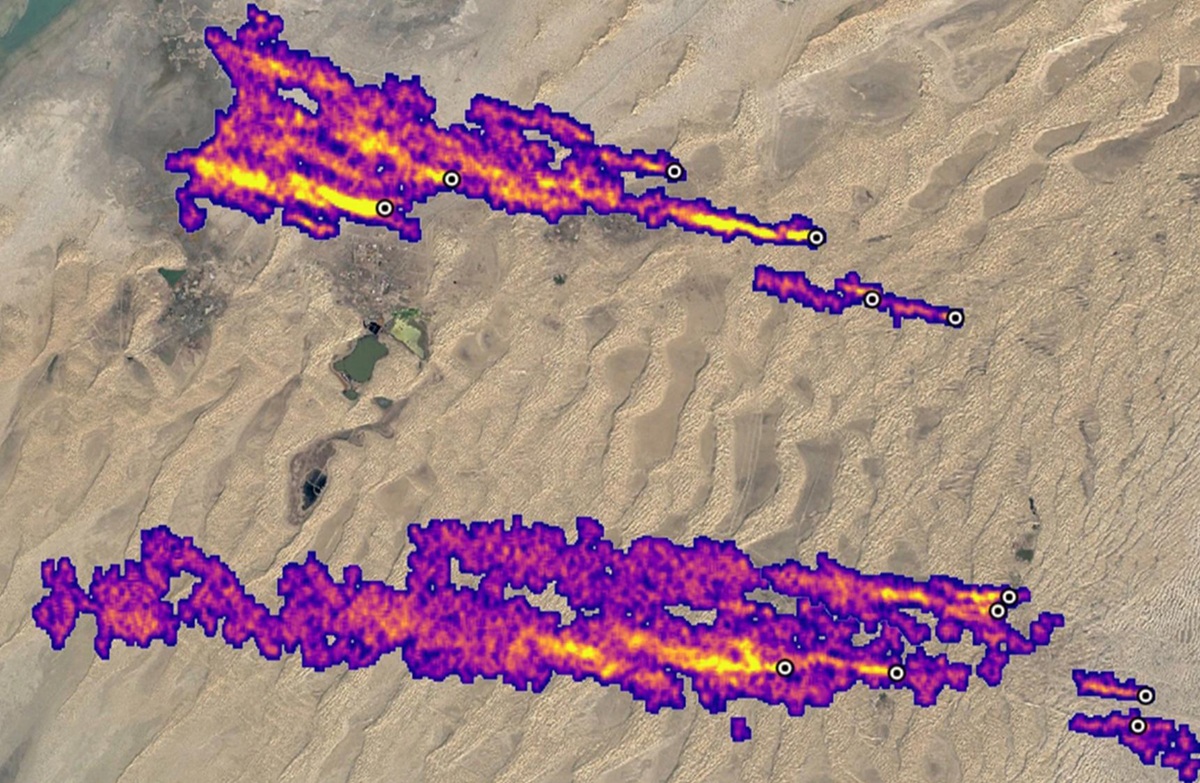
 September plume. Photo: popsci.com
In late October, methane emissions took center stage on Turkmenistan's official agenda. First, the UN country office published a dedicated report on the issue. Then, toward the end of the month, Ashgabat hosted a regional methane conference, and on October 31, President Serdar Berdimuhamedov instructed officials to advance international cooperation on curbing emissions across the oil and gas sector.
All this unfolds against a backdrop of satellite observations that continue to detect massive, recurring methane plumes over Turkmenistan's energy infrastructure. Yet Ashgabat’s current drive is hardly spontaneous: for several years, the country has steadily expanded cooperation with the UN, the World Bank, and the European Union, joined international monitoring systems, and prepared its own accounting framework. Now these efforts are converging.
The scale of the leaks is increasingly visible from orbit, lost methane represents lost marketable gas, and emission transparency is becoming essential for securing international financing and accessing prospective export markets.
What Satellites Reveal
Methane is colorless, but major emissions can be tracked remotely to gauge their intensity. In September 2026, satellite systems once again detected a series of massive plumes across Turkmenistan.
One source was designated TKM_S_555 in the database of the Methane Leaks project. Between September 21 and 29, eight methane plumes were recorded there, with estimated release rates ranging from roughly 1,500 to 4,456 kilograms per hour. At another site, TKM_S_561, NASA’s EMIT satellite detected an emission rate of approximately 2,194 kilograms per hour on September 29.
Methane Leaks links both sources to state concern Turkmengaz, though it classifies this attribution as probable rather than confirmed. It also notes that the releases were not necessarily instantaneous bursts and may have had a cumulative effect.
The UN report published on October 28 cites aging oil and gas infrastructure, a lack of instrument-based monitoring, and limited capacity to utilize all produced gas as the primary drivers of Turkmenistan’s high emissions. Citing data from UNEP’s International Methane Emissions Observatory, the report notes that the nation’s oil and gas sector released approximately 4.3 million metric tons of methane in 2023, while satellite surveillance identified more than 222 major super-emitting events and point sources.
For 2025, the UN cited International Energy Agency estimates placing Turkmenistan’s total methane emissions at roughly 6.19 million tons, with 5.81 million tons—or about 94%—stemming from the energy sector.
By comparison, the global energy sector accounts for around 40% of human-induced methane emissions.
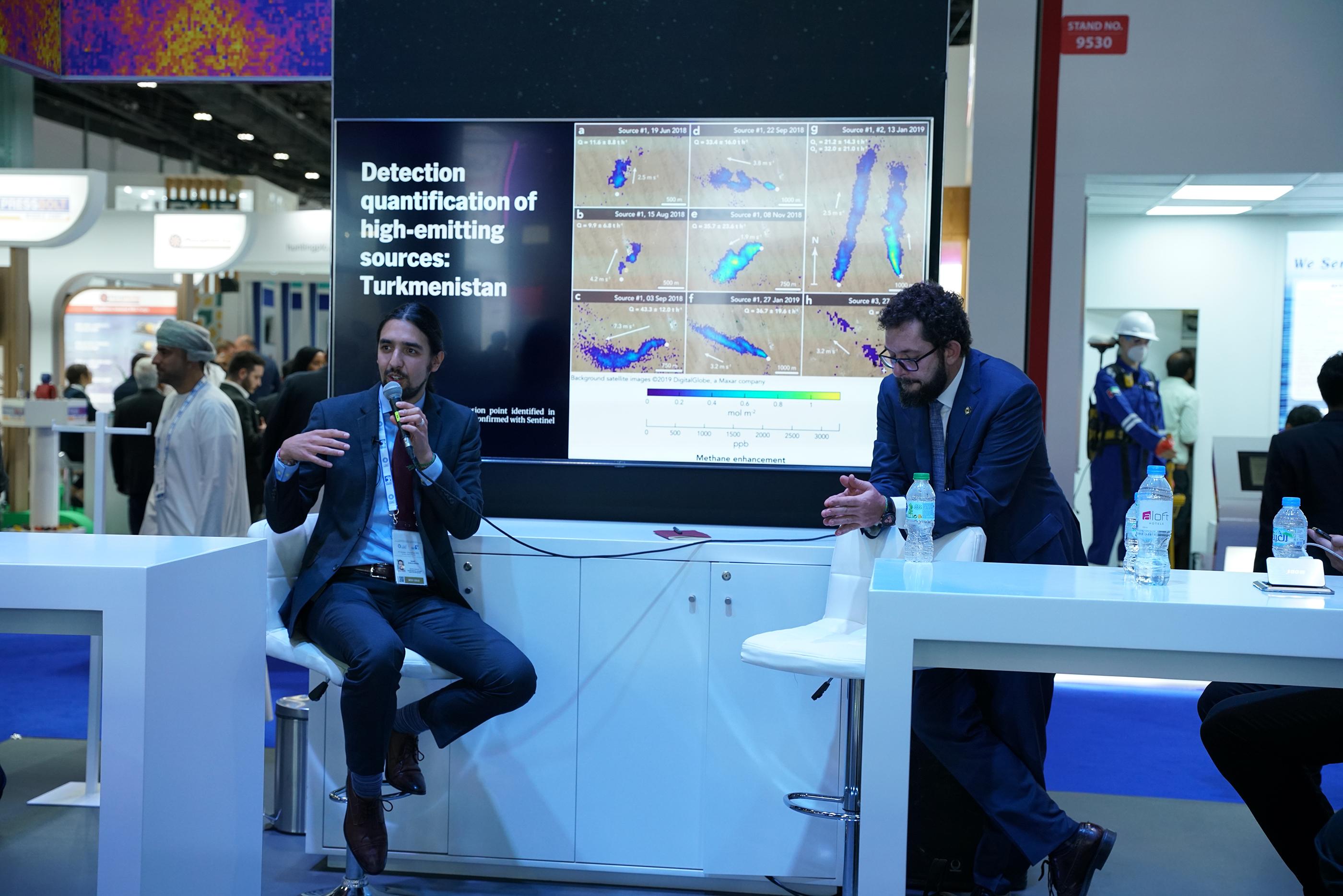 Presentation. Photo: edf.org
In its Global Methane Tracker 2026, the IEA ranks Turkmenistan among the countries with the world’s highest methane emissions intensity in oil and gas extraction—on par with Venezuela. Over one-third of energy-sector super-emitting events across Eurasia large enough to be detected by the MARS system occur in Turkmenistan. According to the IEA, between 2020 and 2023, the volume of emissions tied to major super-emitter events in the country rose by an average of more than 15% annually. This figure specifically refers to major events detectable by satellite, not an overall 15% annual increase in all Turkmen methane emissions.
Satellites, however, do not provide the full picture. While effective at detecting large plumes, their efficacy depends on release volume, instrument specifications, cloud cover, wind speeds, and orbital pass times. Remote sensing must therefore be paired with continuous on-site measurements—precisely where Turkmenistan still faces a significant shortfall.
According to UN data, satellites have detected 248 discrete point sources of methane across the country since 2023. In 2025, 162 sources were identified, with 38 classified as persistent or recurring during the final six months of observation. Nonetheless, the surveillance system has already shown practical utility. One major source had been detected from July 2024 to June 2025. Following a notification from MARS, Turkmengaz identified severe pipeline degradation near Northern Balgui and completed repairs. Two additional sources were detected on June 22, 2025; two days later, the state concern reported completing repair operations at the respective sites.
Thus, satellite monitoring is gradually transitioning from an external tracking tool into an operational mechanism driving domestic action. Yet a handful of patched leaks does not yet represent a systemic emissions cut.
Why Ashgabat Is Tackling Methane Now
Politically, Turkmenistan began moving in this direction in 2023. At the COP28 climate summit in Dubai, Serdar Berdimuhamedov announced the nation's accession to the Global Methane Pledge. The pact sets a collective worldwide target to slash anthropogenic methane emissions by at least 30% from 2020 levels by 2030. While it does not impose uniform mandatory quotas on individual states, participants must take domestic measures to help achieve the collective goal.
In November 2024, Turkmenistan approved an international cooperation roadmap for 2025–2026 while stepping up engagement with the Methane Alert and Response System (MARS). The UNEP initiative tracks major sources via satellite and alerts governments and facility operators.
The next step is moving beyond external satellite feeds to establish a domestic, continuous accounting system. In January 2026, the World Bank released project documentation for a $5 million initiative to establish a methane monitoring, reporting, and verification (MRV) framework across Turkmenistan's oil and gas sector. The project includes a national database, standardized measurement and reporting rules, equipment procurement, personnel training, and facility inspections, bringing together the Ministry of Environmental Protection, Turkmengaz, and Turkmennebit.
On October 31, the project was reviewed at a cabinet meeting. Deputy Prime Minister Guvanch Agajanov reported that Turkmengaz and Turkmennebit are engaging with foreign partners under the World Bank program, prompting Berdimuhamedov to order further international partnerships to reduce methane emissions, state news agency TDH reported.
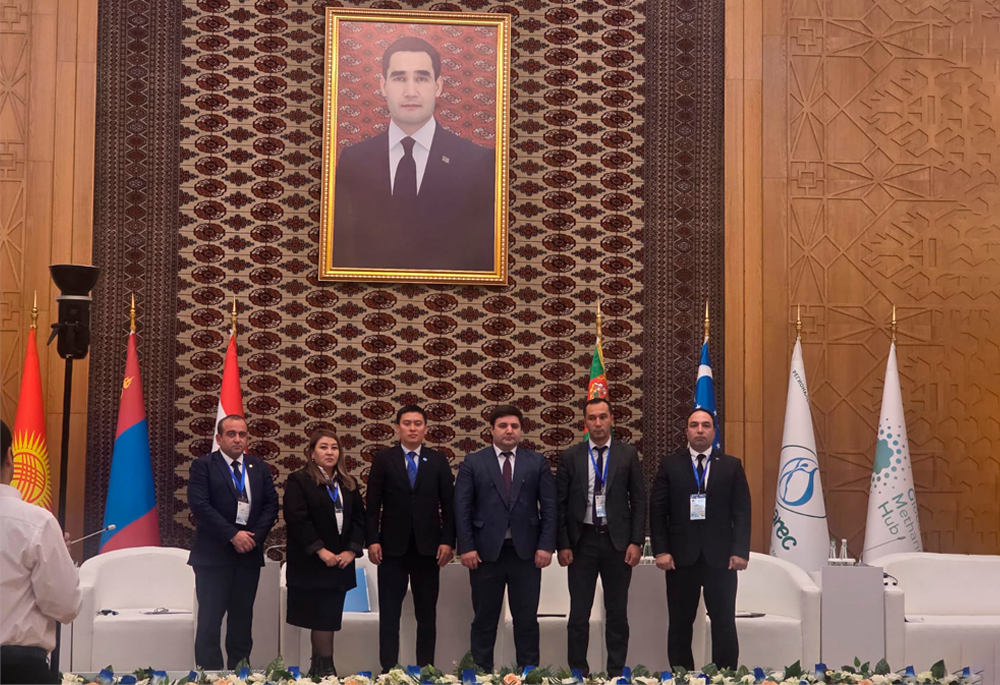 Regional methane conference in Ashgabat. Photo: Business Turkmenistan
Momentum accelerated noticeably in October. From October 12 to 16, a Turkmen delegation took part in a study tour in the United Kingdom, focusing on satellite surveillance, leak detection methodologies, and European methane regulations. The EU Delegation explicitly tied these efforts to Turkmenistan's prospective engagement with the European energy market.
On October 19, the European Union and Germany delivered Leak Detection and Repair (LDAR) equipment to the Natural Gas Scientific Research Institute under Turkmengaz to detect and pinpoint leaks directly on-site. Training for the concern’s personnel commenced simultaneously.
Between October 21 and 23, methane abatement took center stage at the Oil and Gas of Turkmenistan 2026 international conference, where the UN outlined a draft joint reduction program. This was followed by the October 28 UN report and a CAREC regional conference on October 29–30, which tackled operational details ranging from measurement and pipeline repairs to securing project financing.
This flurry of activity within a few weeks underscores that the methane agenda in Ashgabat is evolving beyond high-level climate diplomacy into ground-level deployments of instruments, specialists, data systems, and capital projects.
The motivation extends beyond environmental concerns. Methane is the primary constituent of natural gas, meaning major leaks represent lost product that could otherwise be utilized domestically or exported for revenue.
For Turkmenistan, where gas underpins national exports, this is critical: national statistics cited by the UN show natural gas generated 66.9% of the country's export revenue in 2024.
According to UN estimates, the energy lost through Turkmenistan’s methane venting and leaks is theoretically equal to five times its domestic electricity consumption. The economic benefit of cutting emissions equivalent to 7.5% of 2022 gas output is estimated at no less than $1.2 billion, with an additional $50 million to $300 million potentially available through carbon finance mechanisms. These remain model estimates rather than realized revenues.
Consequently, combating methane emissions for a gas-exporting state differs fundamentally from demanding production cuts. Substantial emissions can be abated through pipeline overhauls, equipment upgrades, rapid leak repair, and curtailed venting. In many cases, recovered gas offsets the capital costs.
Beyond Climate Concerns
Shifting market dynamics abroad represent another major catalyst. The European Union is progressively extending its methane regulations to imported oil, gas, and coal. Starting in 2027, select import contracts will face monitoring, reporting, and verification mandates; by 2028, importers must report methane intensity; and by 2030, strict intensity caps will apply, according to the timeline detailed by the European Commission.
The immediate weight of the European factor should not be overstated: China remains the dominant buyer of Turkmen gas, and Turkmenistan currently ships no major volumes directly to the EU.
Nonetheless, Ashgabat has long sought export route diversification, and Brussels now explicitly links compliance with methane standards to future access to the European energy market.
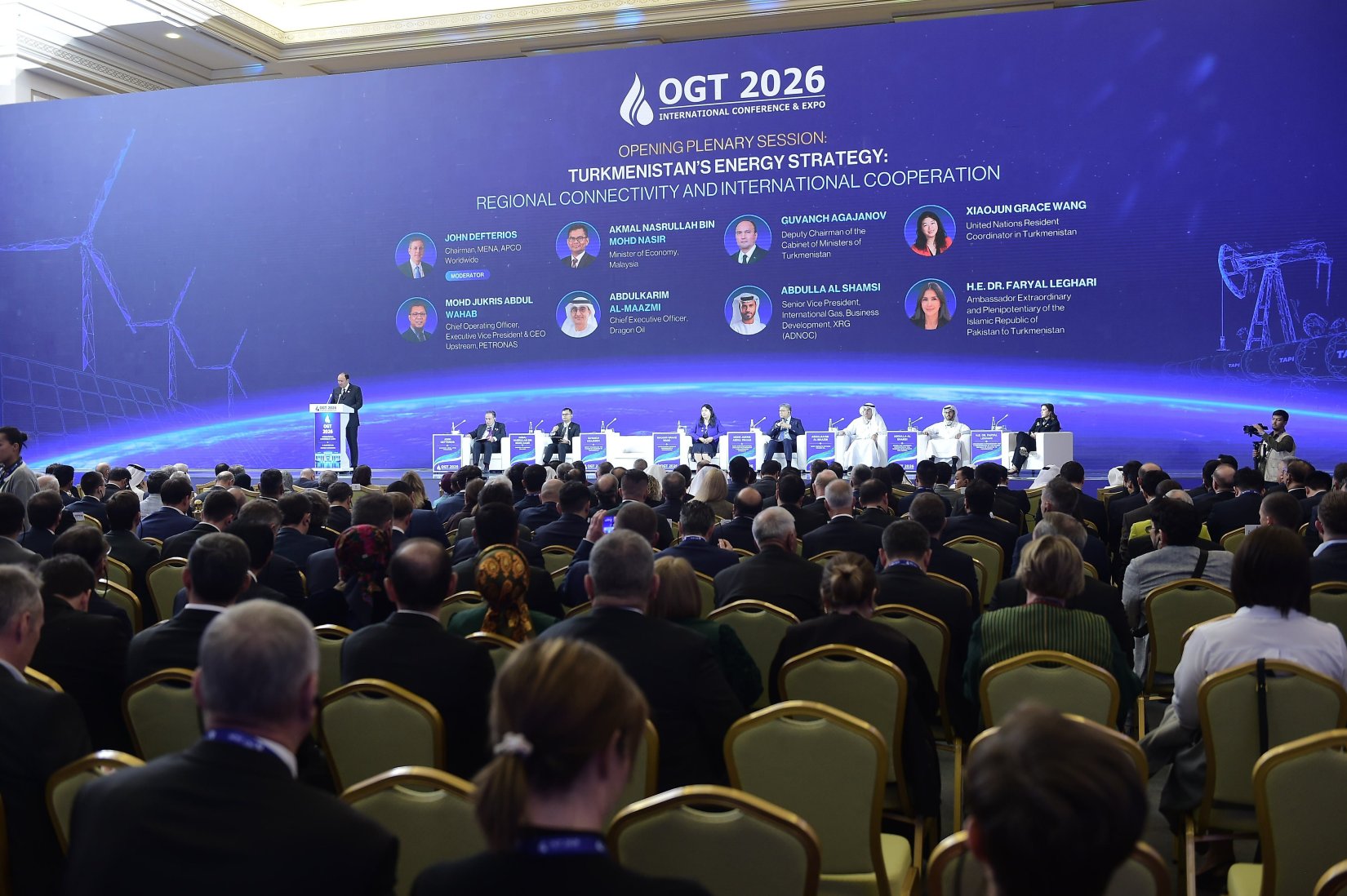 OGT Conference. Photo: Organizers
Accessing that market demands more than unverified claims of clean gas—it requires rigorous, verifiable data. Here, the mismatch between orbital detections and field-level monitoring remains stark. As of 2025, the UN notes that the Oil and Gas Methane Partnership 2.0 covered only about 9% of Turkmenistan’s gas output. Robust, site-level measurement and reporting frameworks are still in their infancy.
Ashgabat’s recent push represents the next phase of a broader trajectory: moving from diplomatic pledges and roadmaps to satellite alerts, field repairs, ground instruments, staff training, World Bank assistance, and green financing.
It is still too early to declare a breakthrough. The IEA continues to classify Turkmenistan among the world’s most methane-intensive energy producers, and satellites continue to spot massive plumes. Genuine progress will not be measured in conferences or memorandums, but in fewer recurring super-emitters, smaller plume volumes, and widespread deployment of direct on-site leak detection.
Methane remains invisible to the naked eye. But massive leaks are now glaringly evident from space—making them far harder to overlook.
-
 14 October14.10Digital DependenceYandex Data Center Attacks Expose Kazakhstan's Digital Vulnerability
-
 13 October13.10From Nakhodka to the Persian GulfIran Courts the CIS and the Eurasian Economic Union
-
 13 October13.10A Nepali Lesson for Rogun111 groups urge the World Bank to freeze funding for high-mountain dams after Nepal's deadly flood, naming Tajikistan's Rogun among projects to drop
-
 01 October01.10Yields of 6–7 Tonnes per HectareUzbekistan is expanding a Chinese cotton-growing method to a third of its cotton fields
-
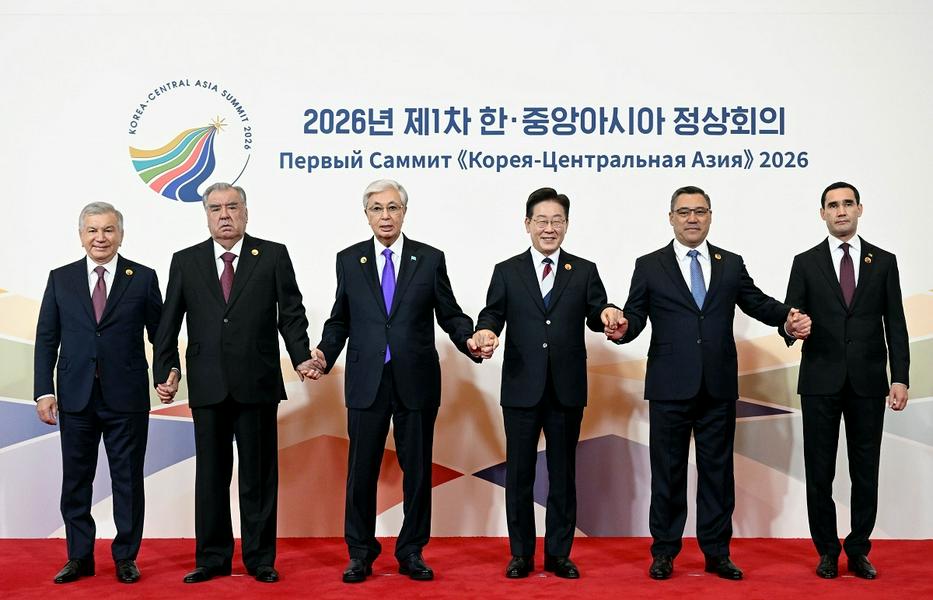 17 September17.09Summit of Morning FreshnessCritical minerals, artificial intelligence — what else was discussed at the “Central Asia–Korea” meeting
-
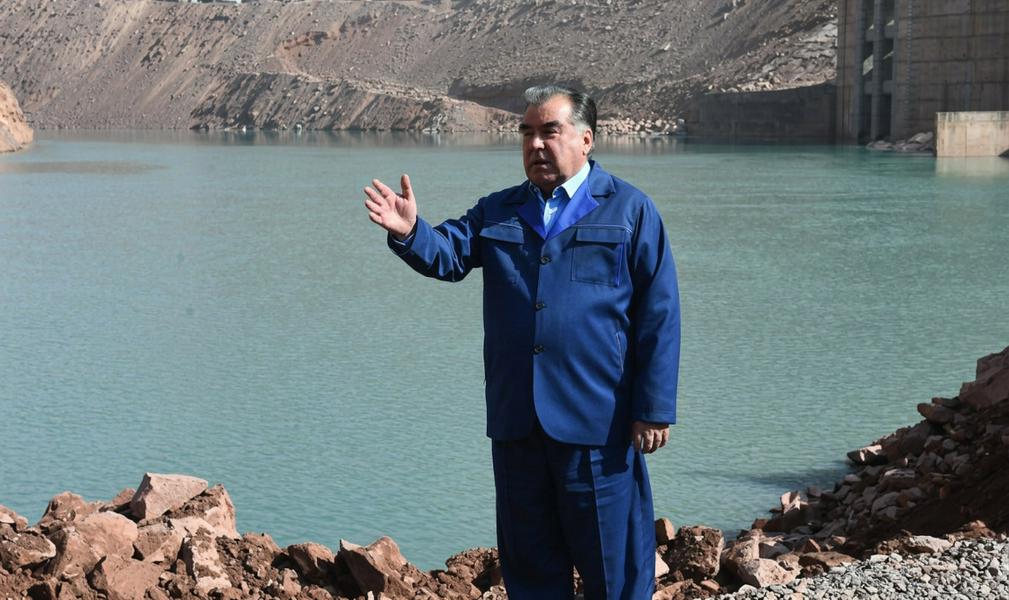 16 June16.06A Dam Named After One FamilyThe world's tallest dam is being built in Tajikistan on empty reserves and other people's loans
-
While Emomali Rahmon receives an honorary certificate “from the UN”, the Amu Darya keeps running shallow…
-
How an Uzbek entrepreneur is building a “YouTube for business” on the Western market.
-
-
What China Can Offer Central Asia in the “Green” Economy