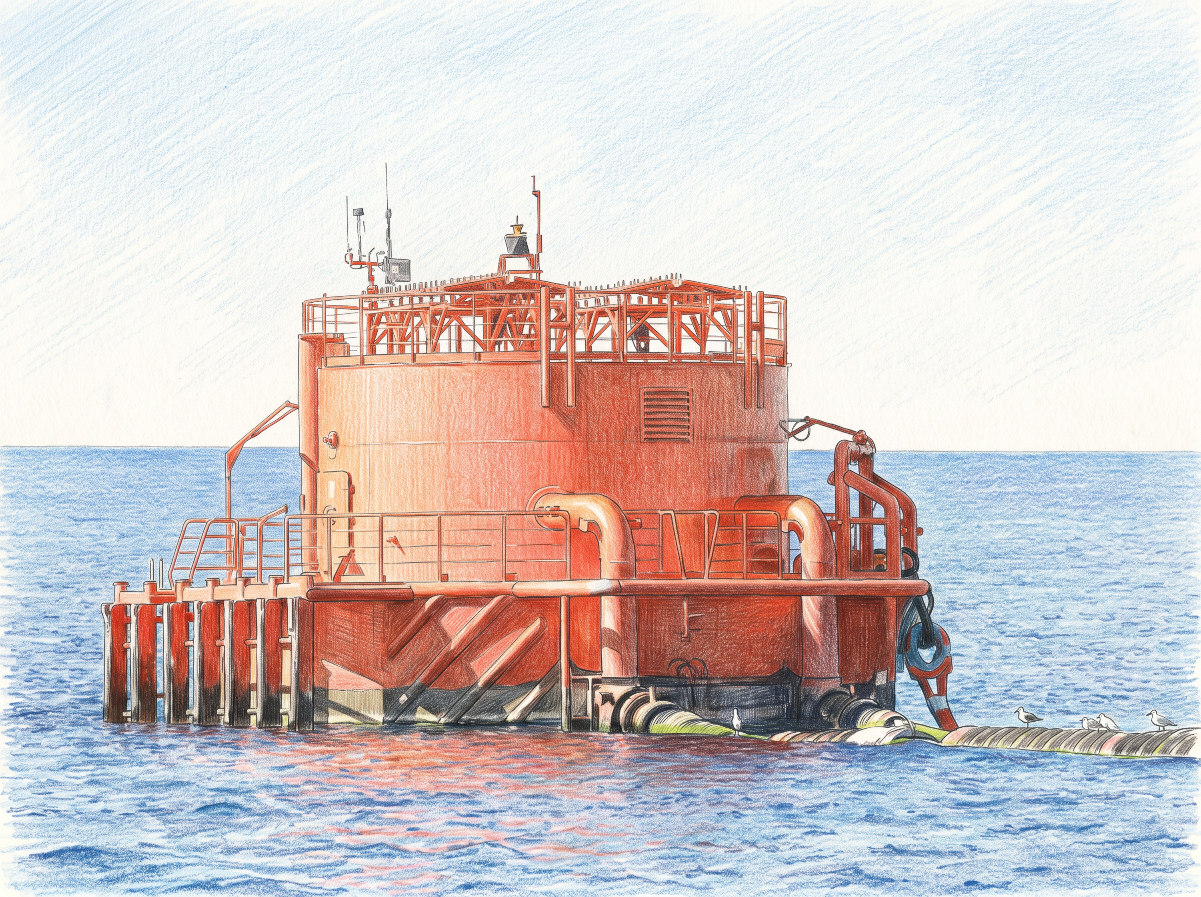
Ukraine has pledged not to strike oil tankers unconnected to Russia, nor the Black Sea infrastructure through which Kazakh oil reaches global markets. Bloomberg reported the commitment on August 8, citing an American official who spoke on condition of anonymity because the agreement is not public. It was formalized after talks between senior US administration officials and Ukraine's leadership.
At issue is the Caspian Pipeline Consortium (CPC) marine terminal near Novorossiysk — the endpoint of the Tengiz–Novorossiysk pipeline, which carries about 80% of Kazakhstan's oil exports and roughly 2% of global oil supplies.
Kyiv will refrain from attacking CPC infrastructure and vessels bound for the terminal, provided three conditions are met simultaneously: the vessel is not under Ukrainian sanctions, is not carrying Russian cargo, and is not owned by Russian individuals or legal entities.
Ukraine has set up contact points where commercial shipowners can submit vessel information and coordinate safe passage; the Ukrainian side also warns carriers which ships may still become targets.
Washington intervened after a series of July drone strikes on tankers near the CPC terminal. Loading was suspended on July 19 and resumed on July 27, only for vessels at the terminal to come under attack again on July 29. No one publicly claimed responsibility. With eight CPC-linked vessels hit, July became the busiest month on record for attacks on Russia-linked oil assets.
For Kazakhstan, the disruptions brought direct losses. The country's Energy Ministry reported a drop in production because of the CPC halt, while the Foreign Ministry called the attacks an encroachment on Kazakhstan's economic interests and said Astana does not rule out demanding compensation. Freight rates for tankers carrying CPC Blend to the Mediterranean climbed above $400,000 a day — a record for the route, according to Baltic Exchange data. CPC Blend exports in August could fall by roughly a third.
Beyond Astana, American companies also have a stake in protecting the route. Chevron owns 15% of CPC and pumps oil at Tengiz; its chief executive, Mike Wirth, discussed the risks of collateral damage with White House officials. In late July, Donald Trump's administration warned Kyiv against striking third-country vessels and oil infrastructure in the Black Sea. Moscow sought to exploit the situation politically: Kremlin spokesman Dmitry Peskov called the strikes on CPC energy terrorism and an attack not only on Russia but also on the United States and Kazakhstan. On July 29, Kazakh Foreign Minister Yermek Kosherbayev discussed the CPC crisis by phone with US Secretary of State Marco Rubio.
The durability of the new arrangement is far from guaranteed. Earlier mechanisms for protecting commercial shipping have already failed: vessels on lists of ships that were not to be hit came under attack anyway. It is also unclear whether a promise will be enough to bring back tanker operators who began avoiding Novorossiysk after the July strikes. For Kazakhstan, the episode is a stark reminder: as long as 80% of its oil exports leave through a Russian port, the security of the Kazakh economy rests on agreements to which Astana is not a party.