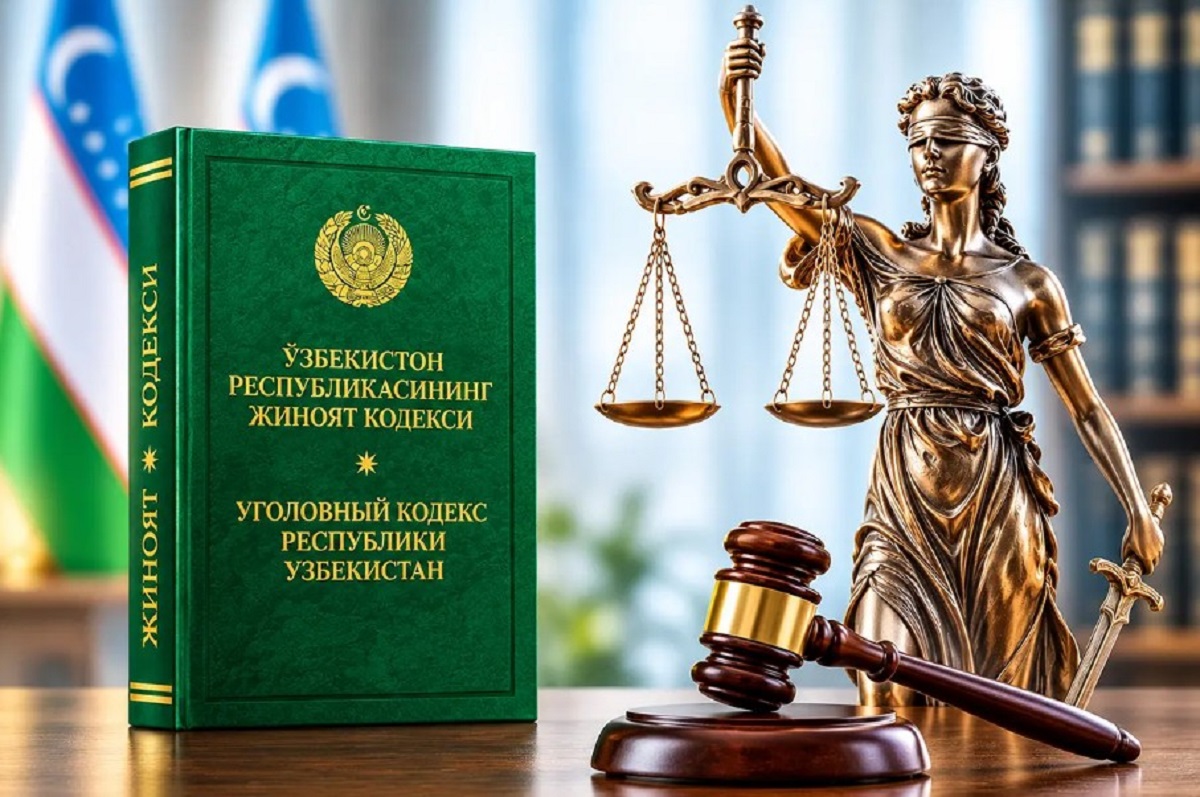
Uzbekistan has amended its Criminal Code to separate legal liability for the organizers of extremist groups from that of their members, slightly reducing the maximum penalty for the latter. The revisions were enacted under a law signed by President Shavkat Mirziyoyev on November 2. The document has been published on the Lex.uz portal and has already taken effect.
Under the revised code, participation in extremist, separatist, fundamentalist, or other outlawed organizations now carries a prison sentence of five to ten years.
Previously, participants in these groups faced the same degree of liability as founders and leaders, with everyone convicted of extremism facing identical sentences of five to fifteen years' imprisonment.
The new law also introduces administrative liability for first-time offenses involving the promotion of banned groups. Specifically, the relevant code now penalizes the «production or storage with intent to distribute of materials promoting ideas of extremism, separatism, or fundamentalism, calling for riots and forcible displacement of citizens, or aimed at inciting public panic, as well as the dissemination of attributes or symbols of extremist and terrorist organizations, or their manufacture and storage for display purposes."
In addition to the confiscation of banned materials, offenders face fines ranging from 50 to 100 basic calculation units (BCUs) — between 22 million soums ($1,856) and 44 million soums ($3,713). Officials face fines of 100 to 150 BCUs (up to 66 million soums or $5,570) or up to 15 days of administrative arrest.
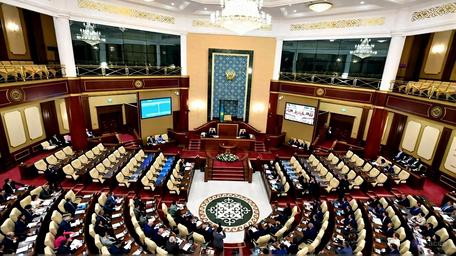
The amendments also refine key terminology. Notably, the term «religious extremism» has been abolished and replaced simply with «extremism.» In August, during debates in the Senate of the Oliy Majlis (parliament), lawmakers noted that this change would end the practice of associating extremism with any specific religion and establish a unified legal standard.
The definition of «extremism» was also made more concrete. Senators noted that the previous wording regarding exceptional acts aimed at inciting national, racial, ethnic, or religious hatred was vague and left broad room for divergent interpretations.
Under the new law, extremism is defined as «encroachment on the country's constitutional order, seizure of power or preparations toward it, the establishment of or participation in illegal armed formations, public calls for terrorist activity, incitement of national, racial, ethnic, or religious hatred, and the production, storage, dissemination, or display of materials that threaten public safety and public order."
The legislation requires the Ministry of Justice to publish and maintain an electronic register of extremist organizations and materials on its public website. Currently, the list is hosted on the portal of the Supreme Court of Uzbekistan.
The law also formalizes the procedure for designating an entity or material as extremist. First, the designated state agency submits a petition alongside an expert evaluation to the Prosecutor General's Office. Upon review, if the supervisory agency concurs, it forwards the case to the Supreme Court, which issues the official extremist designation.