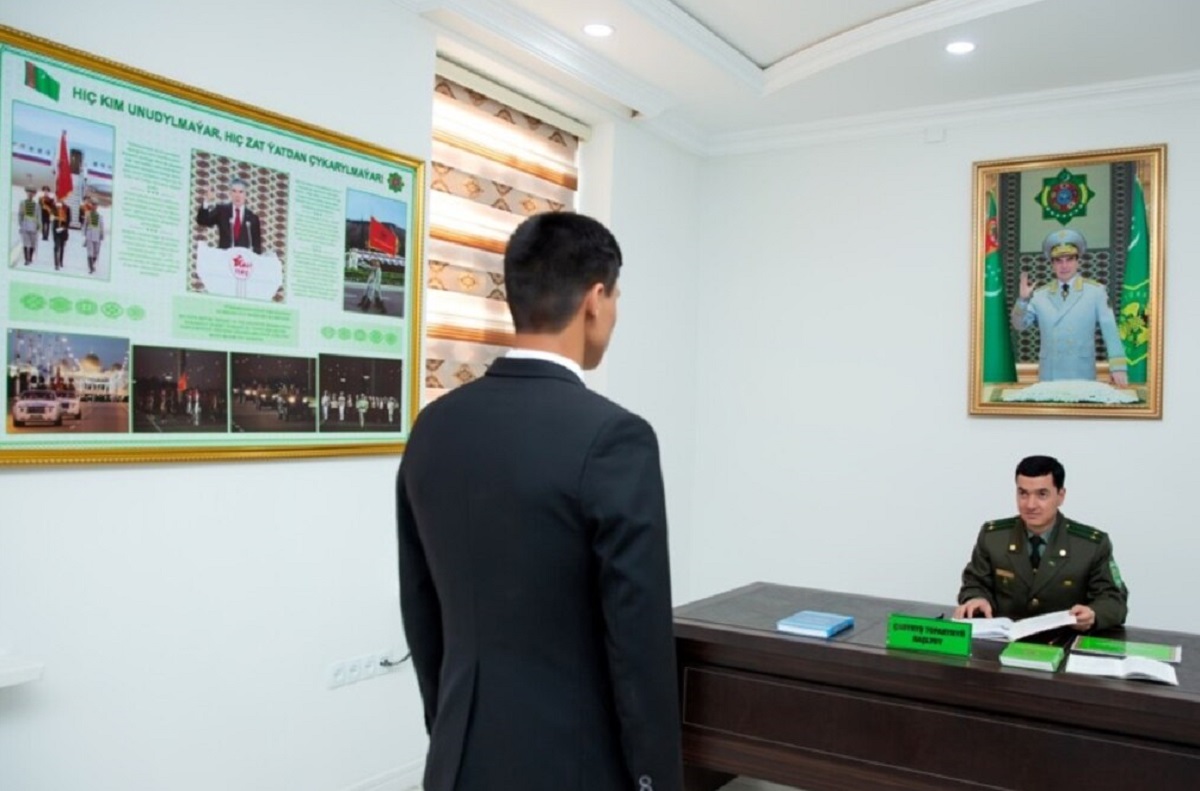
 Photo from milligosun.gov.tm
Turkmen citizens who graduated from foreign universities and returned home report that military enlistment offices are unlawfully refusing to issue them military identification cards. Conscription officials offer no formal rationale, occasionally remarking: “This is because you sat around abroad instead of serving in the military.” This flagrant breach of the law was reported by Turkmen.news, citing accounts from local residents.
According to the outlet, such complaints are increasingly emerging from the Balkan and Lebap regions. Men facing pushback from enlistment offices emphasize that this creates severe complications. In Turkmenistan, a military ID is an essential document required for employment, residential registration (propiska), and opening a bank account. As a result, those left without IDs find their rights severely curtailed and are effectively cut off from key public services.
Enlistment offices typically fail to provide any clear explanation. Under national conscription laws, certain categories of men are exempt from registering, while different regulations apply to those deferred for medical or educational reasons. Such citizens receive deferments until age 26, and mandatory military service cannot be enforced once an individual turns 27. Consequently, most foreign university graduates return home only after reaching that age. The law, however, fails to specify how military IDs should be handled for students who spent their draft-eligible years abroad.
Media sources suggest enlistment offices are withholding documents under orders from Defense Minister Begench Gundogdyev. The only explanation offered by officials is that the government devised this measure to penalize citizens for spending their draft-eligible years outside the country.
A similar situation was reported last year, though officials then simply extorted bribes to release the military cards.
According to Turkmen.news, most Turkmen citizens view military service not as a sacred duty, but as forced labor, as conscripts are frequently coerced into manual labor on officers' private land and forced to harvest cotton.
Families with the means to shield their sons from conscription exploit every opportunity, often sending them to study abroad. Graduates frequently remain overseas to work until turning 27, aiming to avoid military service while still securing their military IDs upon return.